Want to Become a Writer? Start by Reading Like One.
September 29, 2022




The first time I thought I could be a writer, I was in 9th grade. I was on a bus en route to Amritsar for a school trip. And honestly, I was kind of done with my classmates.
Yes sure, I got the appeal of shouting “Woohoo” in inconsistent tenors the first time the school bus went under a tunnel. But when the “cool kids” in the back row shouted for the 13th time in a span of an hour, I knew the price to be part of the cool gang wasn’t one I was willing to pay.
So before the 14th tunnel could come, I put on my iPod and went to the front seats; back to my safe nerdspace. Not to anyone’s surprise, most of them were reading novels or playing Sudoku. And since it was nearing midnight, some of them fell asleep with half-opened books in their hands. So I perused the collection I could “borrow” and landed on a book called “Sherlock Holmes: The Hound of the Baskervilles.”
I found a cozy window seat, used my jacket as a blanket, and started reading this famous detective story.
Around the third hour, something interesting started to happen.
I started to predict what was going to happen next.
And it was not because I had any prior experience conducting criminal investigations. I just started to understand Sir Arthur Conan Doyle’s writing style. I understood how his patterns of narration shifted when he was building towards a revelation. Or whenever the prose became descriptive of the surroundings, there would be one element in the backdrop that would be pivotal for the story to move forward. I understood why the author chose Dr. Watson to be the narrator of the story rather than writing from the perspective of Sherlock Holmes. Isn’t witnessing true genius much more enchanting than the breakdown of the boring grunt work required to become a genius?
And ever since then, I ruined every single book I ever read.
Because I stopped reading as a reader and spent the entire time understanding the literature through the lens of a writer. I was obsessed with figuring out plot devices, scene setting, dialogue, rising action, character sketches, and every single minute facet of storytelling that the writer thought about while writing their piece.
At the time I didn’t know this, but this one single trait turned me into a writer today.
Over the years, I leveraged the knowledge of every unique writing style to modulate my own. I used the informative, functional, and yet engaging writing style of HBS essays to draft Thought Leadership content for CXOs. I used Mitch Albom’s poetic narration to write scripts for advertisements. I have even used Roald Dahl’s writing style to draft stories for my younger cousins.
Want to see it in action?
Even this piece is written by modulating David Epstein’s writing style of journalistic narration fused with storytelling hooks. If you’ve read “The Range”, read this piece from the beginning and you’ll understand how I cherrypicked his style of narration to hook you into a fairly academic piece of literature by using a relatable story with familiar imagery.
Now, although this entire process of reading like a writer was fairly intuitive, I decided to trace the dots and formulate a blueprint that worked for me. But before I proceed, not unlike a pack of cigarettes, I feel like I should give a statuary warning.
If you follow this blueprint, you won’t ever enjoy a piece of literature without actively critiquing or learning from it.
Still here?
Brilliant. Let’s dive in!
The process of reading like a writer starts with, you guessed it, reading. But reading what?
Common sense would dictate that you should read literature that lies in the genre of your writing. And on paper it makes sense.
If I want to write content for a B2B SaaS company, what tangible knowledge would I gain from reading Dostoevsky?
Absolutely nothing! And that is the exact reason why you should read him.
Confused? Allow me to elucidate.
After 2000 years of printed literature, I think it’s safe to say that almost every genre of writing is saturated with content. With every genre, there’s almost a standardization of narration. It targets the same demographics, leverages the same hooks to garner attention, and disappears into the oblivion filled with similar content after its 5 minutes of targeted distribution dries up.
But every once in a while there comes one book, one essay, one novel, one script, or any other variation of the written word that just captures the attention of the entire ethos. It initiates conversations, brings new eyeballs to the genre, and provides an alternate viewpoint to an accepted convention.
What does it do differently?
It narrates the same message but in a different vocabulary. For example, there are hundreds of thousands of Self Help books written on the theme of why you shouldn’t care what the world thinks of you. But “The Subtle Art of Not Giving a F*ck” captured everyone’s attention.
Why?
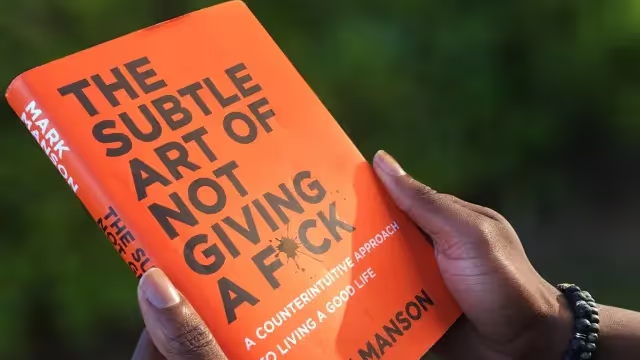
Because it reinvented the wheel. Instead of preaching the same message as a pretentious guru that Gen Z can spot from a mile away, Mark Manson spoke to us as a friend does on text. He dropped his nuggets of wisdom in a style of narration that mirrored the principles of digital writing. Conversational, hard-hitting, and precise.
If Mark Manson only read self-help books for inspiration and never explored digital writing, he wouldn’t have written this bestseller.
So here is the first lesson of reading like a writer.
Read everything, everywhere, all the time.
Explore different genres, modulate different writing styles, and use that knowledge to stand out with a fresh perspective when the rest of the herd is busy replicating the norm.
Now that you know what to read, let’s explore how to read.
First, I’ll start with a small 3-step exercise.
- Remember the last book you read.
- Draft a 100 to 200 word summary of the book
- Compare your summary with a literary review of the book.
This small exercise would help you visualize the difference between your understanding as a passive reader and the reviewer's understanding after actively dissecting the entire piece.
So does this mean I am telling you to read books as if you’re a literary critic? Absolutely not. I’m asking you to go 2 steps further.
I want you to be a student, a critic, and an editor, all at once.
I’m sure this sounds intimidating at first, but don’t worry. I’ll break down every part of this statement. Just stay with me.
Let’s start by understanding, “How to read as a student.”
A good student retains information. A brilliant student asks questions that pushes the boundaries of the curriculum.
To become a great writer, you have to be a brilliant student. Here’s how.
Whenever you’re reading anything, constantly ask “Why”
- “Why did the writer start this essay with a quote”
- “Why did the writer introduce the protagonist after 10 pages of introduction”
- “Why was the word, ‘intense’ used to describe a character”
- “Why did the introduction to a blog about a software solution start off with a statistic from the 19th century”
Question every single decision that the writer made while writing.
If you’ve written anything till now, you’d know that writing is rarely intuitive. It is always deliberate. Every single word is chosen to deliver maximum impact. Even while writing this piece, I reviewed it over 20 times and in every revision cycle, I found multiple areas I could improve my messaging.
Your role as a student is to identify and isolate those decisions.
See the intent behind every sentence. This knowledge would help you understand different approaches to conveying the same message. Try highlighting sentences and maintaining a note diary where you can rewrite sentences/phrases/words that stand out to you along with your takeaways.
Now if you’re wondering, “Akash, how do we know that the writer has adopted the right approach to deliver the message? How do I know that I’m not learning the wrong techniques?”
And the answer is, you don’t.
And that’s why your next step is to act as a critic.
Now that you have understood all the decisions that the writer took while drafting a piece, your job is to see the validity of those decisions.
For a moment, abandon your imposter syndrome that’s wondering if you’re competent enough to critique an established author.
If you’re a reader, then you’re already a critic.
Go back to your notes where you’ve documented all the decisions that the writer took. As an unbiased reader highlight the segments that instantly grabbed your attention, words that stopped you in your tracks, and phrases that made you rethink your preconceived notions. This list is your goldmine of inspiration.
But more importantly, create separate documentation of areas where your attention started to divert, where you felt that the language was a bit ambiguous, and where you felt disconnected from the plot. Essentially, try to find all the weak points of the piece you’ve read.
And now, it’s time for you to become an Editor.
After you’ve compiled all the weak points of the story, try to rewrite convoluted sentences, rephrase weak dialogues, and restructure the plot outline to make the story more engaging.
I’m sure none of this would be easy, and that’s okay. It’s not supposed to be easy.
But this is where you truly elevate yourself from a reader to a writer.
Reading like a writer is an iterative exercise that helps you understand, appreciate, and apply the nuances of storytelling. It helps you become a more inclusive communicator and storyteller.
As I mentioned, it is a fairly intuitive process. So do refer to this blog as a “How to” guide to start this journey. But don’t be afraid to figure out a framework that works best for you.
Hope you liked this post. If you want to see more such stories on your feed, do follow my page and subscribe to get notified every time I post.


Continue
Reading

Best Branding for Startups: Differentiation vs. Distinction
Most branding work for startups delivers a style guide. A style guide governs what a brand looks like. A signal system governs what a brand makes people feel, recall, and associate, at every touchpoint, over time, without being reminded. The difference between the two is the difference between a brand that is different and a brand that is unmistakable.
What Visual Identity Is Actually For (And What AI Cannot Replace)
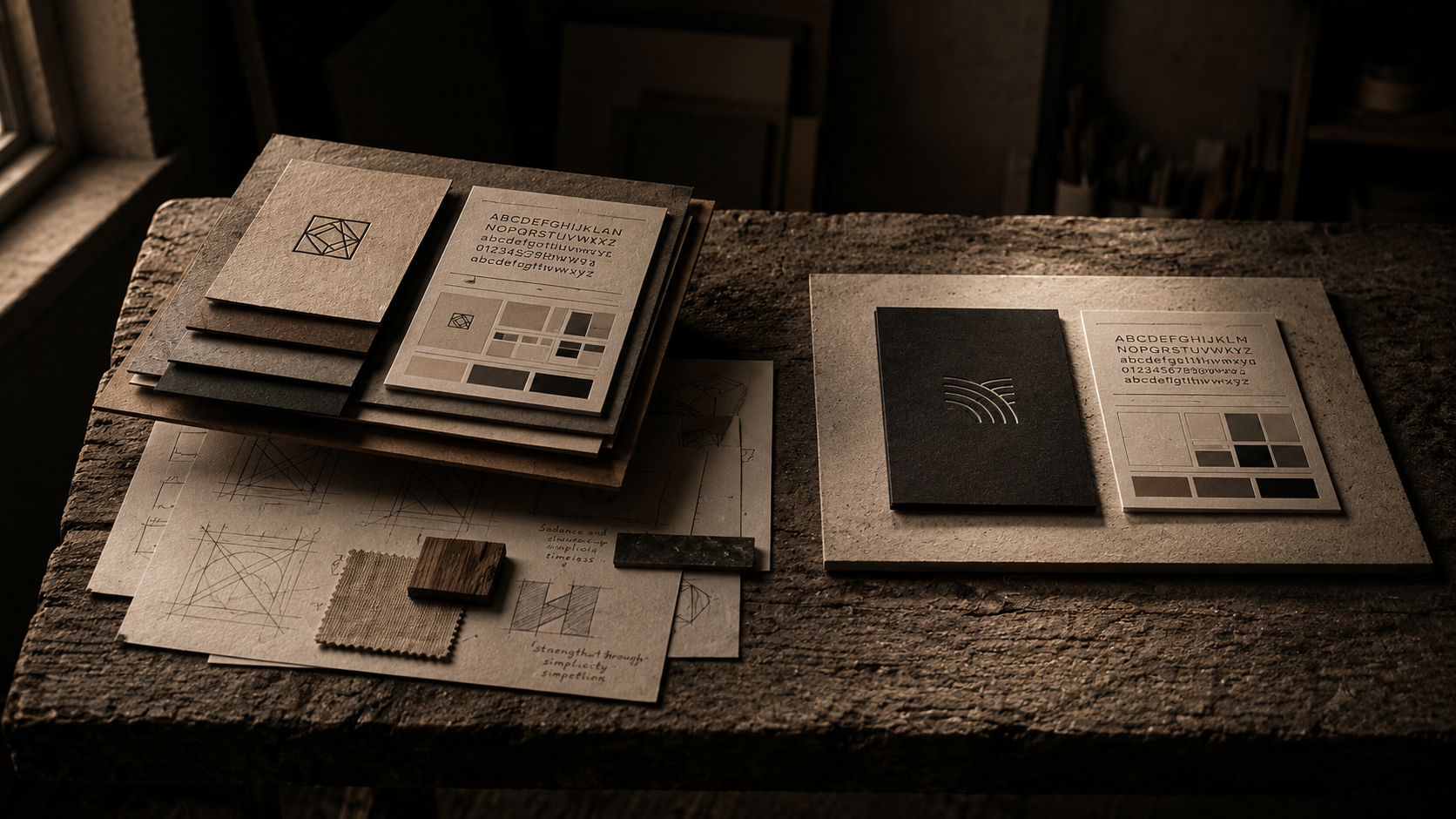
The designer who cannot articulate the argument behind each element of a mark has not made a design decision. They have made a visual guess. AI generates visual guesses that look like design decisions. The difference is not immediately visible. That is exactly the problem.

Sustainable Packaging Is Brand Identity, Not Just Ethics
The brands that have built durable advantage through sustainable design share almost nothing in common, except this: the packaging choice was an expression of what the brand already believed about itself, not a response to what regulators or critics required.