The Waitlist as Brand Strategy: What Drop Culture Teaches Premium Startups
May 23, 2026





On a Thursday morning in 2003, a line formed outside a small skateboard shop on Lafayette Street in Manhattan. The people in it were not waiting for a sale. There was no discount, no launch event, no press release. They were waiting for a drop: a limited release of clothing that Supreme had decided, with almost no announcement, to make available that day. The product would be gone in minutes. Most of them knew this. They showed up anyway.
Here is the part most people misread: Supreme did not build that line through advertising. There was no campaign that drove those people to the pavement at 7am. The line formed because Supreme had spent years making the act of waiting feel like belonging somewhere. By the time any serious brand strategy agency for startups started paying attention, Supreme had already written the playbook.
The waitlist is not a launch mechanic. It is the first act of brand strategy. And for premium brands, it may be the most consequential one.
In This Article
1. Why Most Startups Think About This Wrong
2. The Psychology Underneath: Anticipation, Not Scarcity
3. The Real Psychology: Identity, Not Urgency
4. Three Models, One Lesson
5. What Premium Startups Can Build From This
6. Frequently Asked Questions
Why Most Startups Think About Brand Strategy Wrong
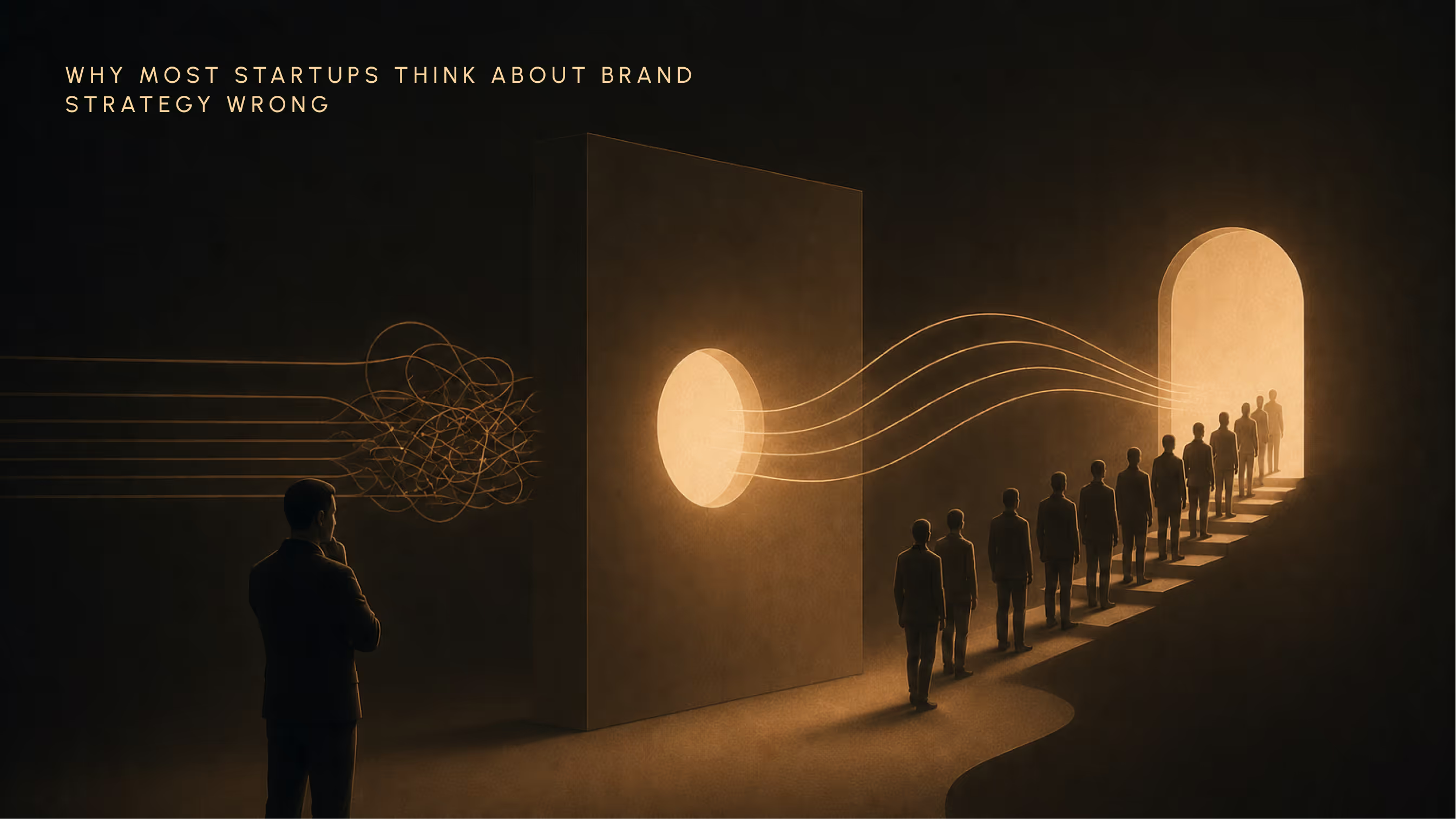
Ask a founder why they have a waitlist and you will hear one of a few things. To manage server load. To validate demand. To build a pre-launch email list. All of these are true. None of them are the point.
The standard framing treats the waitlist as a consequence of demand: you have more people who want the thing than you have capacity to serve them, so you make them queue. This gets the causality exactly backwards. The most sophisticated use of the waitlist does not respond to demand. It creates demand by manufacturing the conditions for desire before a single product changes hands.
Startups that treat exclusivity as an operational outcome miss what is happening inside the queue. The waiting period is not dead time. It is the brand's first and most extended conversation with its audience, and most companies let it happen in silence.
Scarcity Is a Commodity. Anticipation Is the Asset.
Scarcity is binary. You have the thing or you do not. Any brand can manufacture it by simply producing less. The problem is that scarcity alone does not create desire: it creates anxiety. And anxiety does not build a premium brand. It erodes one.
Anticipation is different. Anticipation is a sustained psychological state, and it is one the brain finds genuinely rewarding. Bluma Zeigarnik's research in the 1920s established that incomplete goals maintain what neuroscientists now describe as elevated accessibility in working memory: the brain keeps returning to them, priming them, keeping them live. More recent work on reward circuitry suggests dopamine runs on anticipation as much as on completion. The waiting state is not neutral. It is active.
Daniel Kahneman's framework of the experiencing self versus the remembering self adds another layer. The anticipation of a purchase often generates more subjective value than the purchase itself. Which means the waiting period, if designed well, is not the prelude to the brand experience. It is the brand experience.
The brands that understand this do not just restrict access. They curate what happens to someone during the wait. Teasers. Cultural cues. Insider language. A feeling of being selected, not just queued. This is what separates a demand-led branding strategy from a stock-management problem. You can read more about why most positioning work fails to grasp this distinction in our piece on why most startups get positioning backwards.
The Real Psychology: Identity, Not Urgency

FOMO is the lazy version of this insight. Fear of missing out is real, but it is also cheap: any flash sale can trigger it. What the best waitlist strategies are actually engineering is something more durable.
When someone joins a selective waitlist, they are not just purchasing access. They are making a public statement about who they are. The brand does not need to explain what it stands for. The act of waiting does that work. You are the kind of person who waits for this.
This is identity signaling, and it is stronger than urgency because it does not expire. Urgency fades the moment the clock runs out. Identity, once formed, persists. And the brand that was present at the moment that identity formed has a claim on it.
The Waitlist as the First Identity Ritual
Superhuman built a waitlist that eventually held over 450,000 people who were ready to pay $30 a month for email. Email. The category that Gmail, Outlook, and Apple Mail had collectively decided was worth exactly zero dollars per month. Rahul Vohra was not competing on features. He was competing on who you were if you used his product.
But here is what made it work: joining was not easy. There was a 30-minute onboarding call. You were assessed. Most products remove friction from their acquisition funnel at all costs. Superhuman deliberately added it, because the friction was the signal. It communicated to every new user: this brand takes your time seriously, which means it takes your work seriously, which means it takes your identity seriously.
Luxury brand strategist Corrado Manenti has written that in premium positioning, the desire to signal is often stronger than the desire for the product's functional attributes. The onboarding call was not operational quality control. It was the first ritual of a community that knew who it was.
A commodity waitlist says: we have more demand than supply. An identity-building waitlist says: we know who belongs here, and you are about to find out if you do.
Two Types of Waitlist
Three Models, One Lesson
Three brands built the same underlying architecture through completely different categories. Each is worth studying on its own terms. Together, they make a single argument.
Supreme: The Drop as Weekly Ritual
James Jebbia once told Vogue that the clothing Supreme makes is kind of like music. It is an odd thing to say about a hoodie, until you understand what Supreme was actually selling. The hoodie was almost incidental. What Supreme sold was a recurring event: a cultural moment with a fixed rhythm, a community that gathered around it, and a product that served as the ticket proving you had been there.
The Thursday drop model trained attention. It was, as Byron Hawes describes in his book Drop, less like retail and more like lining up for a Star Wars premiere: an event people chose to participate in, with or without a guarantee of getting what they came for. StockX data from 2020 showed Supreme items reselling at two to three times their retail price, but the more interesting number is not the markup. It is the line. The line formed before the product existed, which means the demand was not for the product. It was for the experience of being someone who got there.
Supreme did not need a campaign to drive that line. The Thursday drop was the campaign. The brand agency insight here: you do not manufacture desire from scratch. You create the conditions for desire to become ritual. Then desire self-replicates.
Hermes: The Waitlist as Relationship Architecture
Hermes is the long-game version of this, and the most instructive for premium service brands. The Birkin waitlist is not a marketing tactic. It is a relationship-building protocol. Access to the bag is earned through purchase history and client relationship, not simply desire. You cannot want your way onto the list. You have to belong.
A single Birkin takes 20 to 25 hours of handcrafted production. The scarcity is real. But Hermes has done something more sophisticated than simply restrict supply: they have turned the acquisition journey itself into proof of status. The customer does not feel they waited. They feel they qualified. The product, when it finally arrives, is recognition of who they have become through their relationship with the brand.
Hermes posted revenue of over 15 billion euros in 2024 while, as the Vogue College of Fashion noted, deliberately resisting the pressures of trend-driven fashion. Exclusivity and commercial scale are not in opposition. They are the same strategy, executed with patience. The scarcity trap is the failure mode of brands that want the prestige without the patience. More on that in our piece on when exclusivity becomes a growth ceiling.
Superhuman: The Waitlist as Product-Market Fit Engine
Superhuman used its waitlist to do three things simultaneously, which is why it is the most transferable model for startups.
First, it built demand by signaling premium positioning before anyone could judge the product. Thirty dollars a month for email, in a market where free was the default, said something specific about who you were if you paid it. You are the kind of person who invests in their craft. The waitlist was the proof of concept for that identity, before the product even shipped.
Second, it used the waitlist to pre-qualify its tribe. In 2019, Superhuman had 275,000 people on the waitlist ready to pay. Most founders would have rushed to convert every one of them. Vohra limited onboarding to 100 users per week. Each one went through a 30-minute call. Critics called it leaving money on the table. It was actually the opposite: it was building the kind of community that money cannot buy once lost. The brand asset was the culture of the user base, and that culture had to be curated before it could be scaled.
Third, it ran the waitlist as a continuous research operation, refining product-market fit in real time through what Vohra described in his First Round Capital essay as the "very disappointed" test: measuring the percentage of users who would be very disappointed if the product disappeared. The waitlist was not a holding pen. It was a design process.
When Grammarly acquired Superhuman in 2025 for approximately $825 million (verify against Crunchbase before publishing), it was not buying an email client. It was buying the community that had been assembled through four years of intentional access management. That community had been built, one onboarding call at a time, through the friction of the waitlist.
What This Brand Strategy Means for Startups Without a Queue
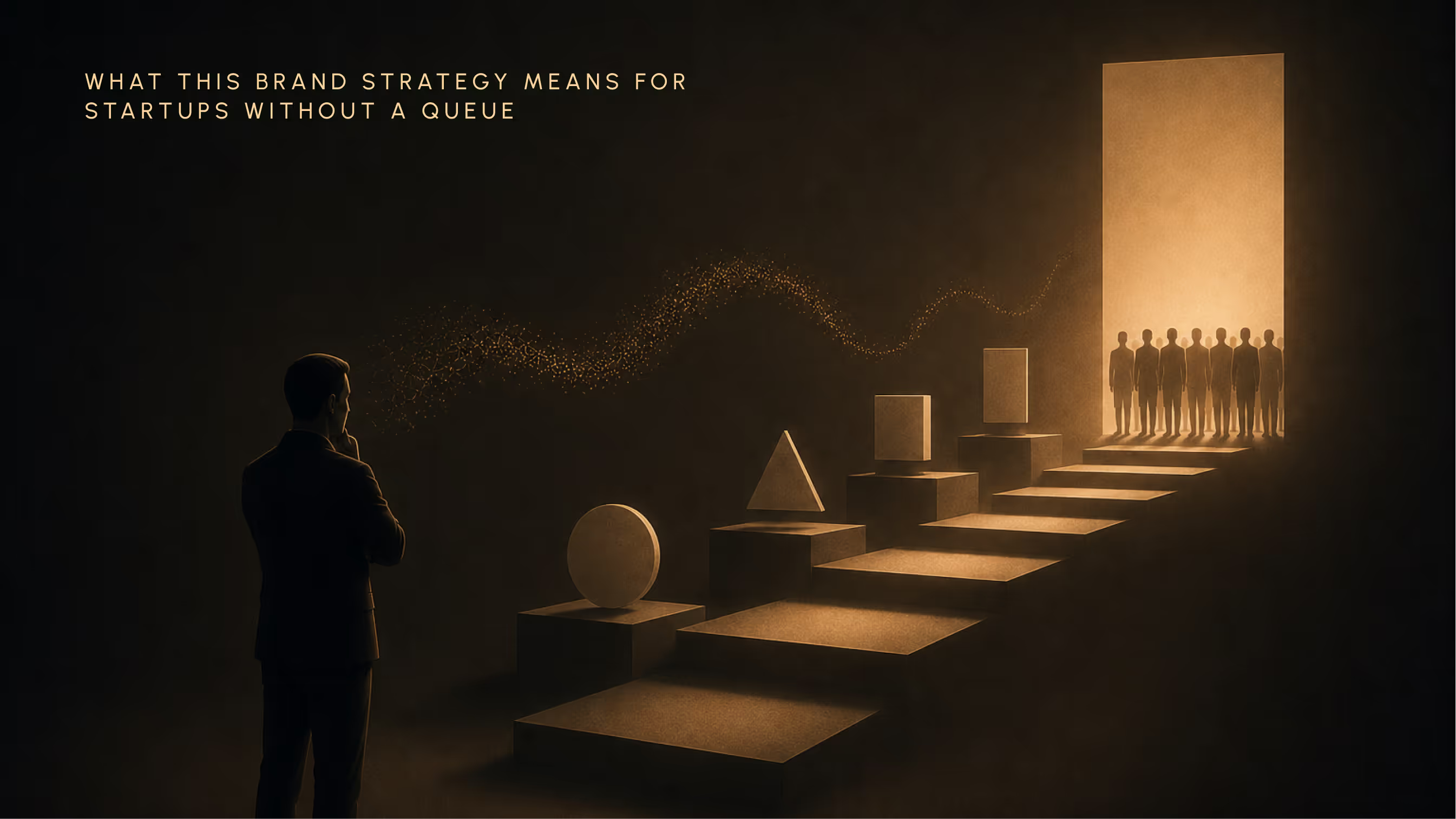
Here is the implication most startups miss, because they are thinking about the waitlist as a product launch tool: you do not need a queue to run this playbook.
You need to design the pre-ownership experience with the same intentionality as the product itself. The waitlist is one mechanism. The broader discipline is demand-led branding: building desire before access, shaping identity before transaction, turning anticipation into affiliation.
A brand strategy agency for startups that understands this does not just help you name things and pick colours. It helps you design the conditions under which your audience begins to identify themselves as yours. That work begins long before the product ships. Often, it is the most important work that happens.
If you are building something premium, these are the questions worth sitting with before you open the doors. They are the kind a brand strategist would bring into a workshop, not a checklist you complete once and set aside.
Three Questions for Your Anticipation Architecture
What does joining your waitlist or early access program signal about who the customer is?
Not what they get, but what it means about them that they applied. Superhuman’s answer was: you take your work seriously. Hermes’s answer is: you have arrived. Supreme’s answer was: you are someone who shows up. If you cannot answer this question, the waiting period will be empty, and empty waiting does not build brands.
What happens to someone during the waiting period?
What content, community, or ritual deepens their affiliation before they can buy anything? The waiting period is the brand’s most extended interaction with its most interested audience. Most brands leave it blank. The ones that do not are building something the others cannot replicate.
What makes the act of being accepted feel like recognition, not just access?
This is the hardest question and the most important one. Access says: you can come in now. Recognition says: we knew you belonged here. Hermes does the second. Most brands, even when they have a waitlist, do the first. The difference is felt immediately, and it persists. You can read more about how the best consumer brands engineer this from the moment of first contact in our piece on brand before product.
Frequently Asked Questions
What is drop culture and how does it apply to brand strategy for startups?
Drop culture refers to the practice of releasing products in limited, time-structured batches designed to create cultural events rather than simple transactions. For startups, the principle translates beyond product scarcity: any brand can engineer a pre-launch or access experience that functions as a brand-building event, building anticipation and identity affiliation before money changes hands.
Does a waitlist actually improve brand perception for a premium product?
Yes, but only when the waitlist communicates something about who the brand is and who it selects. A waitlist that functions as a pure queue, with no ritual, content, or identity signal, is just friction. Superhuman's personal onboarding call is the standard: every interaction during the wait should deepen the user's sense that this brand knows what it is doing and why they belong to it.
How does a brand strategy agency help startups build demand before launch?
The agency's role is to design the pre-launch brand experience: positioning, access architecture, community language, and cultural cues that make early adopters feel like insiders rather than prospects. The waitlist is one mechanism within that system. The broader discipline is demand-led branding: structuring the brand so that desire precedes availability, and identity forms before transaction.
Is scarcity marketing ethical, or is it manipulation?
The distinction is between engineering desire and exploiting anxiety. Manipulation uses artificial limits and fake urgency to pressure decisions. Demand-led branding creates genuine cultural events that people choose to participate in. Hermes is transparent that their scarcity is tied to artisan production time. Supreme builds a community that wants the ritual. Brands that manufacture false scarcity tend to collapse the moment trust breaks, because they were never building anything durable in the first place.
The Queue Is the Product
Go back to Lafayette Street. The line outside Supreme is not a symptom of the brand's success. It is the brand itself, made visible. It is the community gathering. It is the identity being enacted in public, hours before the doors open.
For premium startups, the brand is not built at launch. It is built in the wait. And if you are not designing that wait, you are not doing brand strategy. You are just opening a door and hoping the right people walk through.


Continue
Reading

Best Branding for Startups: Differentiation vs. Distinction
Most branding work for startups delivers a style guide. A style guide governs what a brand looks like. A signal system governs what a brand makes people feel, recall, and associate, at every touchpoint, over time, without being reminded. The difference between the two is the difference between a brand that is different and a brand that is unmistakable.

What Visual Identity Is Actually For (And What AI Cannot Replace)
The designer who cannot articulate the argument behind each element of a mark has not made a design decision. They have made a visual guess. AI generates visual guesses that look like design decisions. The difference is not immediately visible. That is exactly the problem.

Sustainable Packaging Is Brand Identity, Not Just Ethics
The brands that have built durable advantage through sustainable design share almost nothing in common, except this: the packaging choice was an expression of what the brand already believed about itself, not a response to what regulators or critics required.