The Craft Premium: Why Slowness Is the New Luxury Signal
June 23, 2026





Contents
1. When Speed Was the Premium
2. Category by Category: The Craft Premium Takes Hold
3. The Three Mechanisms That Make Slowness Work as Strategy
4. What the Craft Premium Is Not
5. How to Build the Craft Premium Into Your Brand Strategy
6. Frequently Asked Questions
7. The Return on Patience
In the ateliers of Hermès in France, a single artisan makes a Birkin bag from start to finish.
No production line. No division of labour. One person selects the leather, cuts the panels, hand-stitches every seam using a technique unchanged since the company’s founding in 1837 as a harness maker, finishes the edges, sets the hardware, and stamps the bag with their own mark.
It takes between 15 and 20 hours.
If the bag does not pass quality inspection, it is dismantled. Not discounted. Not redirected. Dismantled.
Here’s what’s interesting about that last detail: for any premium branding studio working at the upper end of the market, this is not a story about how expensive the Birkin is. It’s a story about what kind of signal is still worth paying for.
This is the most consequential shift of the last decade to understand: speed used to signal capability. It no longer does.
When Speed Was the Premium
To understand why, you need to understand what speed used to mean.
In 1913, Henry Ford introduced the assembly line at Highland Park, Michigan. Before it, building a Model T took over 12 hours of skilled craftsman time. After it, 93 minutes. Cars that had been objects of wealth became objects of access. Speed, in this context, was not about disposability. It was about democratisation.
Frederick Winslow Taylor formalised the logic. His The Principles of Scientific Management, published in 1911, argued that the optimised process was the moral process. Efficiency was not a shortcut. It was progress in physical form.
For most of the 20th century, if you moved quickly, you were assumed to be capable.
When Moving Fast Became a Brand Value
Mark Zuckerberg’s early Facebook motto was move fast and break things. David Kirkpatrick documented it as explicit internal philosophy in The Facebook Effect (2010). It was not a casual phrase. It was a credo, a brand argument, a signal to engineers that velocity was the measure of seriousness.
The entire venture capital model followed the same logic. Funding rounds rewarded speed of growth. Product cycles compressed. Agencies started advertising turnaround times. Studios offered rapid brand sprints.
Speed became the universal premium signal.
Here’s the problem with universal premium signals: they stop being premium the moment everyone has them.
When every startup promises to move fast, fast stops meaning anything. When every branding agency offers a rapid turnaround, rapid stops differentiating. When every product is always shipping soon, the phrase becomes noise.
Speed became the floor. Not the ceiling. Not the point.
The inversion is now visible in the market.
Disposable things are made fast. The categories commanding real premium, real price, real cultural longevity are almost uniformly the ones where somebody chose to slow down and said so out loud.
Category by Category: The Craft Premium Takes Hold
.jpg.jpeg)
This is not an aesthetic preference. It is a pattern. Look across enough categories and the same signal keeps appearing: the brands at the upper end of their markets have made slowness legible as a choice.
Fashion: The Stitch as Strategy
Kate Fletcher coined the term slow fashion in a 2007 article for The Ecologist, drawing on the Slow Food movement as her reference point. The fact that fashion’s counter-movement needed its own name tells you how thoroughly speed had colonised the industry.
The brands that built real premium did not wait for the language. They were already doing it.
Hermès has made the Birkin the same way since 1984: one artisan, start to finish, saddle stitching developed in the 1800s. In 2014, the company produced approximately 70,000 Birkin bags. That is not a small atelier. That is a global luxury house that chose to maintain a method because the method is the argument.
Bottega Veneta took a different kind of slowness. On January 5, 2021, under Creative Director Daniel Lee, the brand quietly deleted its Instagram, Facebook, and Twitter accounts. No announcement. No farewell post. 2.5 million Instagram followers, gone. Lee’s conviction was stated: social media homogenises culture. The deletion was not silence. It was a position. Kering CEO François-Henri Pinault confirmed it months later: the brand was not disappearing from social media, it was using them differently.
The refusal to participate in the speed of the feed was, itself, the luxury signal. It is the same quiet positioning impulse that connects to the broader stealth luxury conversation, the one our piece on why quiet luxury is a starting point rather than a destination traces in full.
Loewe went the other direction. Jonathan Anderson arrived as Creative Director in 2013 and institutionalised craft as cultural value. He founded the Loewe Foundation Craft Prize, described as the world’s first international award for contemporary craftsmanship. He positioned Loewe stores as spaces where people could encounter art and handmade objects even if they couldn’t afford to buy anything. During the pandemic period, the brand released Making of videos documenting the hand-stitching of its bags in real time.
Anderson’s reasoning was direct. In a Whitewall interview, he said: “I feel like craft is a very good way of breaking down the realities of luxury, and showing the process. I think the more that we understand how things are made, the more we can ultimately see their value and merit.”
Process visibility, as brand strategy.
Food: The Fermentation Economy
In March 1986, the first McDonald’s in Italy opened near the Spanish Steps in Rome.
Carlo Petrini showed up not with signs, but with bowls of penne pasta. He and his friends distributed them to the protesters. Their slogan: “We don’t want fast food. We want slow food.”
McDonald’s opened anyway. The movement began.
Three years later, the international Slow Food manifesto was signed at the Opéra Comique in Paris by delegates from 15 countries. Its opening: “We are enslaved by speed and have all succumbed to the same insidious virus: Fast Life.”
What Petrini understood, before the vocabulary existed to say it strategically, was that the speed of production is a signal about the value placed on the thing being produced. A burger in 90 seconds says something about what the burger is worth. A sourdough that takes 72 hours says something else entirely.
Fermentation is the most literal version of this. A 25-year Scotch is not 25 times better because it is 25 times more skilled. It is different because it contains 25 years. The time is in the product.
René Redzepi and David Zilber’s The Noma Guide to Fermentation (2018, Artisan Books) runs to over 450 pages. In structural terms, it is a cookbook. But the way it was received, the cultural weight it carries: it functions as a document about a kitchen’s philosophy of patience. The process is the product. The book proves it.
It is the same argument we trace in the context of brand heritage and provenance, in our piece on what heritage brands have always understood about the compounding value of origin.
semiotics
Furniture: Living Better with Less That Lasts Longer
Dieter Rams designed the 606 Universal Shelving System for Vitsoe in 1960. It is still in production today, 65 years later, in essentially the same form. A component purchased in the 1970s is compatible with a component made this year.
Vitsoe’s positioning is not subtle: “For 65 years we have stood up to a world that deliberately designs products to have a limited useful life.”
Rams was direct in 2007: “Fashion objects are not capable of being long-lived. We simply cannot afford this throw-away mentality anymore. Good design has to have in-built longevity. I believe that the secret of the longevity of my furniture lies in its simplicity and restraint.”
The brand actively encourages customers to buy less. Vitsoe planners call clients proactively to suggest starting smaller and adding later. The commercial model is built on the assumption that you will still be a customer in 30 years. Which means the product has to be worth using in 30 years.
Gary Hustwit’s documentary Rams (2018), with a soundtrack by Brian Eno, made the argument to a new generation: the most radical thing you can do with a design is make it last.
Software: The Shape Up Doctrine
37signals makes Basecamp and HEY. The company has fewer than 80 employees, over 100,000 customers, and generates tens of millions in annual profit. It has no investors and no board, and it has no plans to sell.
It also has no product roadmap.
The 37signals approach, formalised by Head of Strategy Ryan Singer in Shape Up (2019, free at basecamp.com/shapeup), is built around six-week cycles. Work is not managed from backlogs. Teams are given a fixed time budget and asked to shape the problem before building the solution. The methodology replaces “how long will this take?” with “how much is this worth?”
Jason Fried, co-founder and CEO, has been explicit about the brand logic. The company focuses on what people will always want: speed, simplicity, great customer service. Not the hottest framework. Not the newest model. The lasting things.
DHH has put the philosophy plainly in public: they refuse to commit to a product roadmap because they reserve the right to change their minds when the work reveals something unexpected. The constraint is the principle.
The pattern, by category
The Three Mechanisms That Make Slowness Work as Strategy
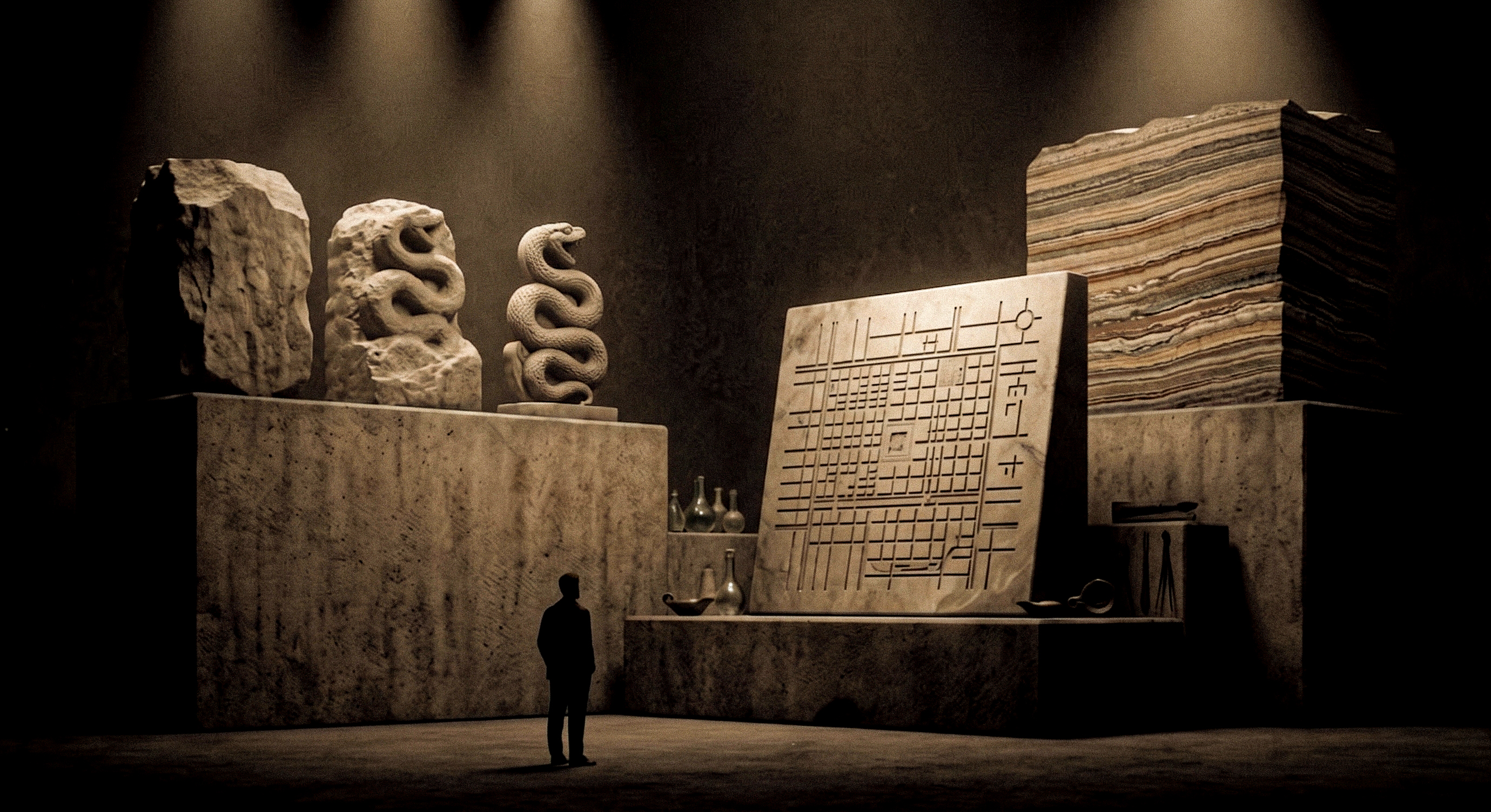
Hermès, Bottega Veneta, Loewe, Vitsoe, 37signals. Fashion, food, furniture, software. The pattern holds across categories too different to explain through sector dynamics.
So what is actually happening?
These brands do not just move slowly. They do three specific things that convert slowness from a limitation into a positioning.
Mechanism 1: Process Visibility
Craft premium brands make their production process a visible asset, not a backstage secret.
Hermès artisans stamp their work. Loewe built an entire video series documenting bags being hand-stitched. Vitsoe publishes its planners’ practice of advising customers to buy less. Each of these is a decision to put the how inside the what.
This is not behind the scenes content. It is not the factory tour video that brands post to seem relatable. It is the deliberate, structural choice to make the process part of the product’s argument.
When you know that a single person spent 20 hours on the object you are holding, the price stops being arbitrary. The labour is now in the room with you.
Anderson’s articulation of this is precise: “I think the more that we understand how things are made, the more we can ultimately see their value and merit.”
Mechanism 2: Intentionality Legibility
Slowness only functions as premium when it reads as choice, not constraint.
This is the knife edge.
Bottega Veneta’s social media deletion worked because it was legible as a considered refusal. Not a technical failure. Not disorganisation. A position, framed as a position by the brand’s parent company within weeks of the decision.
37signals’ no-roadmap policy lands as philosophy, not neglect, because the company has been articulating it in public for over a decade. Books, podcasts, a complete methodology available for free. The intentionality is documented to the point where it cannot be read as accident.
The Craft Premium collapses the moment slowness looks like something that just happened to you. Silence without context is not luxury. It is confusion.
Intentionality must be communicated before it can be perceived.
That is the strategic task: not just being slow, but making the slowness legible as deliberate.
Mechanism 3: Time as Material
Here’s the deepest version of what’s happening.
These brands do not merely take time. They make time itself part of the product.
A Birkin that takes 18 hours to hand-stitch does not just take time. It contains time. The stitching is a record of those hours, carried forward in the object. A 25-year whisky is not aged: it is the accumulation of those years, made liquid. Vitsoe’s 606 shelf, designed in 1960 and still functioning today, is 65 years of time well designed, present in your living room.
Walter Benjamin wrote about aura in 1935: the authentic presence of an artwork in its particular time and place. Mechanical reproduction destroys aura by making copies available everywhere, at any time. What reproduction cannot copy is the original’s position in time. Its having been made by a specific person in a specific moment.
Craft production restores something like aura to commercial objects. When time is made material, the product carries a temporal argument: this is worth your decade, your generation, your inheritance.
Patek Philippe’s advertising tagline says it plainly: “You never actually own a Patek Philippe. You merely look after it for the next generation.”
The semiotics of why restraint signals premium more powerfully than noise is a longer conversation, one the work on luxury brand semiotics traces closely.
What the Craft Premium Is Not
Let me stop you right there, because there are three ways this argument gets misread.
Not Inefficiency
The Craft Premium is not anti-scale. Hermès reportedly produced approximately 70,000 Birkin bags in 2014. 37signals serves over 100,000 customers with fewer than 80 people.
Neither is slow in the sense of small. Both are slow in the sense of deliberate.
What destroys the Craft Premium is not volume. It is arbitrariness: allowing pressure for speed to compromise the process that generates the signal. You can be slow and large. What you cannot be is fast and premium, not for long.
Not Nostalgia
The Craft Premium is sometimes misread as a heritage strategy: something available only to brands with century-old archives.
Jonathan Anderson disproves this. When he arrived at Loewe in 2013, a brand with a history stretching back to 1846, he said: “When I joined LOEWE, I had this thing where I didn’t believe the concept of luxury existed anymore in modern society. I felt it was an odd marketing tool to make people feel interested in elitism.”
He built the Craft Premium forward, not backward. New brands can build it. Startups can build it. What is required is not age but conviction, and the willingness to design a process that can survive being looked at.
Not a Performance
The most dangerous failure mode: claiming slowness without earning it.
Artisan on a Subway menu. Handcrafted on a Starbucks frappuccino. Premium on a template-built brand deck delivered in 48 hours.
When craft language is deployed without craft process, the word empties. The audience today is more culturally literate about this than at any previous moment. They have seen too many artisan things that were not.
The Craft Premium depends on the process actually existing. The test is simple: can you make your process visible without embarrassment? If not, the claim is not yet earnable.
How to Build the Craft Premium Into Your Brand Strategy

The good news: you do not need a 187-year history. You need six things.
1. Make one element of your process visible, even just one. Name a supplier. Show a revision. Document a decision that took longer than expected. Specificity is the signal. Vague gestures at quality are not. The thing you can describe in exact detail is the thing that earns belief.
2. Refuse something publicly. A format. A turnaround promise. A type of brief you will not take. Refusal is the most legible signal of conviction. It tells the market what you are for by showing what you are not. 37signals refuses to publish a product roadmap. Vitsoe refuses to pander to fashion cycles. Both refusals are as loud as any launch.
3. Name your makers, your methods, or your materials, by name rather than by category. Hand-stitched saddle leather by the maroquiniers in a Paris atelier is a different claim than premium leather goods. Not because one sounds fancier. Because one is specific enough to be verified, which means specific enough to be believed.
4. Make your cadence part of your brand argument. 37signals’ six-week cycles are public knowledge. They talk about them constantly. Vitsoe’s planners call customers to suggest buying less. Both are using cadence as a visible expression of values. The pace at which you work is not a back-office matter. It is a brand signal.
5. Let something take as long as it needs to take, then say so. If a project took six months longer because you needed to get it right, say so. The explanation is the premium signal. Not the delay. The reason for the delay.
6. Build something designed to outlast its moment. Vitsoe sells components compatible across six decades. Patek Philippe tells buyers they are merely looking after the watch for the next generation. What is your generational argument? Not your five-year plan. Your argument for why the work will still be worth something when the person who commissioned it has moved on.
If any of those six signals feel like the work you need to do on your own brand, this is what Izart Studio does.
Frequently Asked Questions About the Craft Premium
What is the Craft Premium in branding?
The Craft Premium is the price and perception advantage earned by brands that make their process visible and their intentionality legible, as distinct from brands that optimise for speed. It is a signal strategy, not a category. Any premium branding studio working at genuine depth operates this logic, whether or not it names it.
Can new brands build the Craft Premium without a long history?
Yes, and Loewe is the evidence. Jonathan Anderson arrived at a brand with 167 years of history and explicitly refused to trade on it, stating he no longer believed the concept of luxury existed in modern society. He built the Craft Premium forward. What new brands need is not heritage but conviction, and a process that can stand public scrutiny.
Is slow branding only relevant for luxury categories?
No. 37signals is a software company. Carlo Petrini started a global food movement by handing out pasta in a Roman piazza. The Craft Premium operates wherever speed has become the default and differentiation is scarce, which is now nearly every category. It is a counter-positioning strategy available to any brand willing to make its process the argument.
How do you avoid the Craft Premium becoming artisan washing?
The distinction is substance versus claim. Artisan washing is craft language deployed without craft process. The test is concrete: can you make your process visible without embarrassment? If the process has to stay hidden to protect the claim, the claim is not yet earnable. If it can be shown in real detail, it can be built on.
The Return on Patience
Back to the Hermès atelier.
The artisan finishes the last stitch on the Birkin bag. Stamps it. Sets it aside for inspection. If it passes, it ships to a boutique. If it does not, it is taken apart.
Not everything made slowly is good. But everything genuinely premium has someone, somewhere, who chose not to rush.
The brands that will define their categories in ten years are not the ones launching fastest right now. They are the ones doing the harder thing: making their slowness legible, making their process visible, making time itself part of what they sell.
Dieter Rams said it: “I believe that the secret of the longevity of my furniture lies in its simplicity and restraint.”
Restraint is the operative word. Not craft as decoration. Not slowness as nostalgia. Restraint as a choice made against the grain, repeated, until it becomes unmistakable.
The market is full of things made quickly. What it is starved of are things that could only have been made the way they were made, because there was no shorter path to that particular result.
That is the return on patience: not the finished object, but what the process proves about the people who made it.


Continue
Reading

Best Branding for Startups: Differentiation vs. Distinction
Most branding work for startups delivers a style guide. A style guide governs what a brand looks like. A signal system governs what a brand makes people feel, recall, and associate, at every touchpoint, over time, without being reminded. The difference between the two is the difference between a brand that is different and a brand that is unmistakable.
What Visual Identity Is Actually For (And What AI Cannot Replace)
The designer who cannot articulate the argument behind each element of a mark has not made a design decision. They have made a visual guess. AI generates visual guesses that look like design decisions. The difference is not immediately visible. That is exactly the problem.

Sustainable Packaging Is Brand Identity, Not Just Ethics
The brands that have built durable advantage through sustainable design share almost nothing in common, except this: the packaging choice was an expression of what the brand already believed about itself, not a response to what regulators or critics required.