Branding Is Culture. It Always Was.
April 13, 2026





Imagine standing in a marketplace nearly five thousand years ago, along the Nile around 2700 BCE. The sun beats down on rows of clay vessels stacked carefully in the sand. You lift one, turn it over, and your thumb finds a familiar symbol pressed into its base. It belongs to a particular workshop, one known for strong firing and clay that does not crack. In that single mark, you are holding a promise.
Now travel East to ancient Mesopotamia. As herds move through crowded enclosures, each animal bears a brand burned into its hide. The mark is a declaration that establishes ownership and, in doing so, negotiates trust. The word brand itself comes from the Old Norse brandr, meaning to burn. In this context, identity is made permanent through fire.
I love to dive into history because it reveals the origins of our deepest ideas. And here, in two ancient scenes separated by thousands of miles, is branding as a cultural practice in its purest form: a mark that carries meaning, negotiates trust, and tells you precisely what and who you are dealing with.
These were not logos. They were proof.
As trade routes lengthened and craftsmanship scaled, the physical burn of the rancher and the potter's seal softened into the merchant's signature, the guild's stamp, and the family crest. Centuries later, these marks would become the trademark and the global logo. Yet through every evolution, the core purpose remained the same: to render trust legible in an increasingly crowded world.
But belonging has never been simple.
Human existence is a balance between interdependence as well as a desire to stand out. We need the collective, yet we constantly negotiate our individuality within it. It is within this tension, the space between fitting in and distinguishing ourselves, that I believe the true foundations of branding were laid.
And it is precisely this tension that has allowed branding to evolve beyond commerce. From a declaration of ownership: this is mine, it becomes a declaration of belief: this is what I stand for. In this way, branding becomes one of the most potent forms of contemporary expression and dissent.
In this piece:
- How Protest Posters Became the Purest Form of Cultural Branding
- What Digital Platforms Reveal About Culture-First Branding
- Why Branding's Future Depends on Cultural Attentiveness
How Protest Posters Became the Purest Form of Cultural Branding
When I began to explore branding applications in dissent and expression, I found myself thinking often about protest and film posters. Not because they are unusual examples, but because they are honest ones. In most commercial contexts, branding is downstream of a product, a service, something to be sold. Here, branding is the thing itself.
Protest posters are cultural artefacts that act as an invitation to be part of something bigger. Film posters that deliberately move away from selling stories through celebrity faces and familiar formulas do the same thing. What happens in both cases is not persuasion in the narrow sense. Instead, they urge something universal: the need to belong and, at the same time, the need to stand apart.
A protest poster does not simply ask you to subscribe to a manifesto. It also asks you to recognise yourself, to understand where you stand in relation to a world it seeks to reform.
During the May 1968 protests in Paris, the Atelier Populaire collective was formed by students and workers. The collective produced striking protest posters advocating labour rights, solidarity, and resistance to state power. These works were not designed for permanence. They were meant to circulate quickly, to exist in the streets, and to speak immediately.
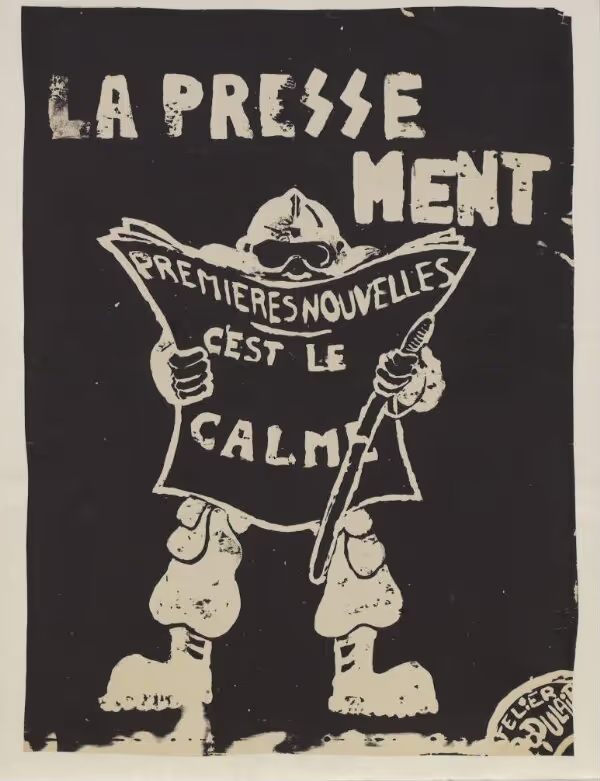
Using simple silkscreen techniques, often working overnight, Atelier Populaire produced posters with bold graphics, limited colour palettes, most often red and black, and direct, uncompromising slogans. Their clarity was intentional. The posters needed to be read at a glance, understood instantly, and resonate collectively.
Despite their ephemeral intent, many of these posters are now preserved in institutions such as the Centre Pompidou and the Victoria and Albert Museum. Their endurance speaks to their historical relevance as well as their success as cultural branding: visual language that captured and allowed a moment to be remembered.
A similar story plays out in the "golden age" of Cuban poster design between the mid-1960s and early 1990s.
The region was battling the throes of the Cold War era. While international organisations commissioned posters that were both propaganda and a nod to conventional graphic art, Cuban designers intentionally avoided Soviet socialist-realist cliché. They developed a distinctive visual language that fused folk references, surrealism, pop and psychedelia, and bold symbolic shorthand.
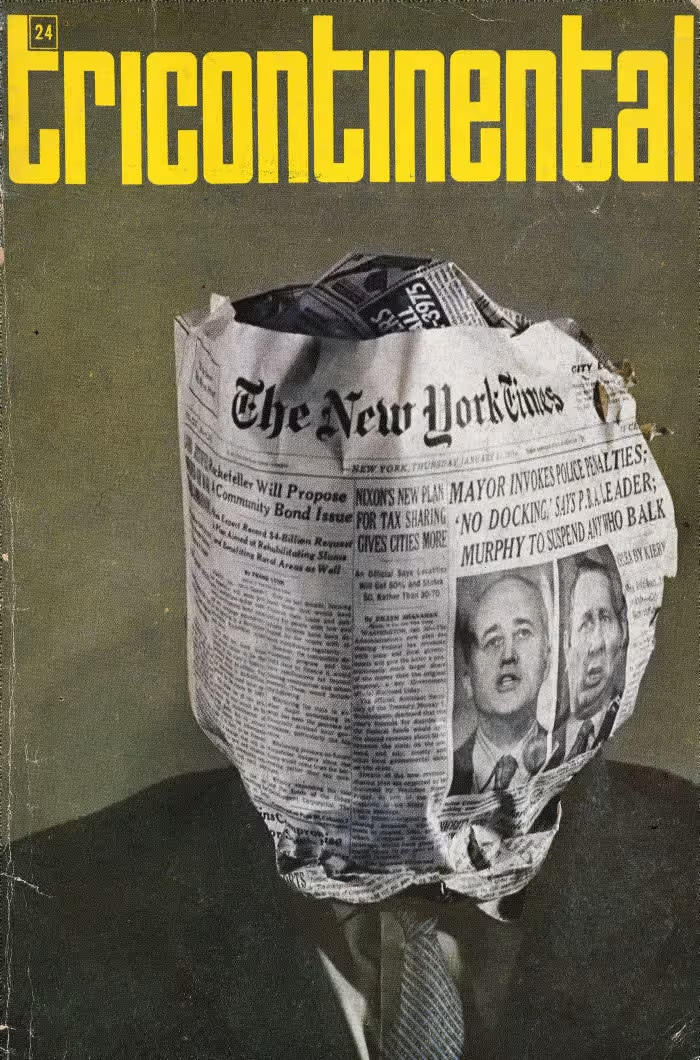
The Havana-based political magazine Tricontinental released covers that became some of the most poignant catalysts of Cold War visual culture. They were not merely deviations from conventional design but carried with them a keen sense of humour in a world that appeared grim.
The depictions were simple: one object, one metaphor, no excess.
The magazine also bore a close affinity with movements such as the Black Panther Party in the United States, which deemed it "a bible in revolutionary circles."
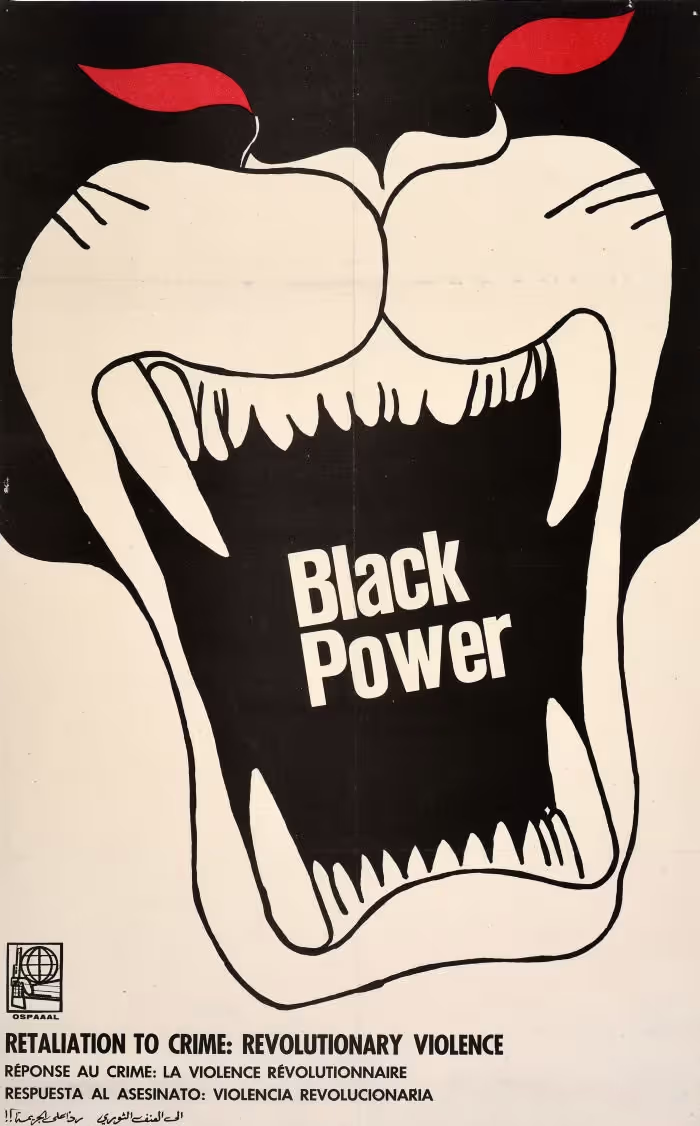
For these movements, branding as dissent functioned as a cultural language, carrying meaning before any explicit message was read.
A similar logic surfaces in film posters that abandon spectacle. When a poster refuses to explain the story or rely on star power, it offers an emotional entry point. An invitation rather than an instruction.
Polish movie posters were the clearest illustration of this shift. Created under conditions shaped by political constraint, economic scarcity, and historical weight, these posters rarely relied on literal representation. They communicated mood rather than plot, tension rather than narrative, feeling rather than fact.
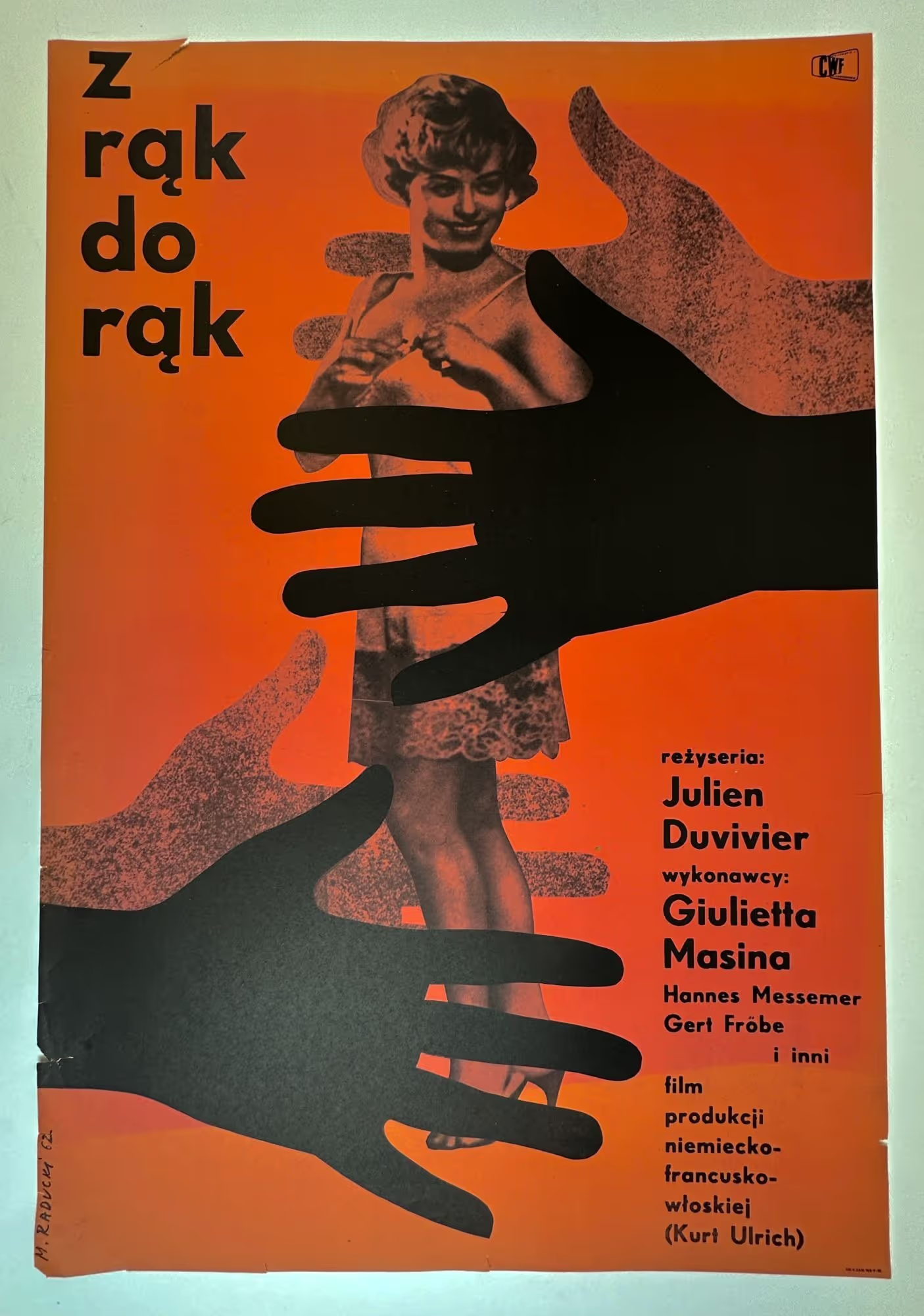
What makes them phenomenal is not just their aesthetic daring, but their function.
They show how history becomes inspiration and how culture finds ways to persist even when commerce is bleak. And how branding, at its most honest, safeguards meaning.

Even in periods that offered little room for nuance, branding can operate as a cultural archive, a way of saying: this mattered, this was felt, this moment existed.
In many ways, our memories of cultural moments stand the test of time not just through events alone, but through the branding that gave them form, branding that evoked a sensory experience strong enough to carry history forward.
Curious how this kind of cultural thinking gets applied to brand strategy? Explore Izart Studio's approach
What Digital Platforms Reveal About Culture-First Branding
The cultural logic of branding is also at work in digital spaces. The context is different. The mechanism is the same.

Open a new note in Obsidian and the screen is dark, a void waiting for thought. Type a single idea. A phrase. A quote. Then another. Link them with a simple double bracket: [[ ]]. Instantly, a connection is forged. A private constellation begins to glow.
The branding of Obsidian is not its logo, but its foundational belief that knowledge is not linear, but relational. You are not a user. You are a cartographer of your own cognition. The tool dissolves, and what remains is the territory: a personal, interlinked web where every thought has a home and a pathway to another.

Bandcamp works in a similar way. Its design deliberately strips away the algorithmic chaos of modern streaming. There are no hypnotic, auto-playing feeds. Instead, you encounter an almost archival grid: album art, artist names, genres. It feels like a digital marketplace built with the deliberate, browsable organisation of a record store.

This technical simplicity is its own form of branding. It signals clarity and respect for the artifact.
But the true cultural ritual is Bandcamp Friday.
Its foundations were laid during lockdowns, when physical spaces of engagement seemed to collapse. On this day, the company waives its revenue share. Every purchase flows directly to the artist. The act of buying a record is transformed. You are no longer just a listener funding a platform. You become a patron in a direct economy of care, participating in a shared, anticipated event.
The aesthetic is the final, stunning layer. Album pages are clean, expansive canvases. The music player is unobtrusive. The focus remains entirely on the artist's world, their artwork, their liner notes, their intended sequence. The website's architecture steps aside, understanding that the strongest brand it can build is one of reverence.
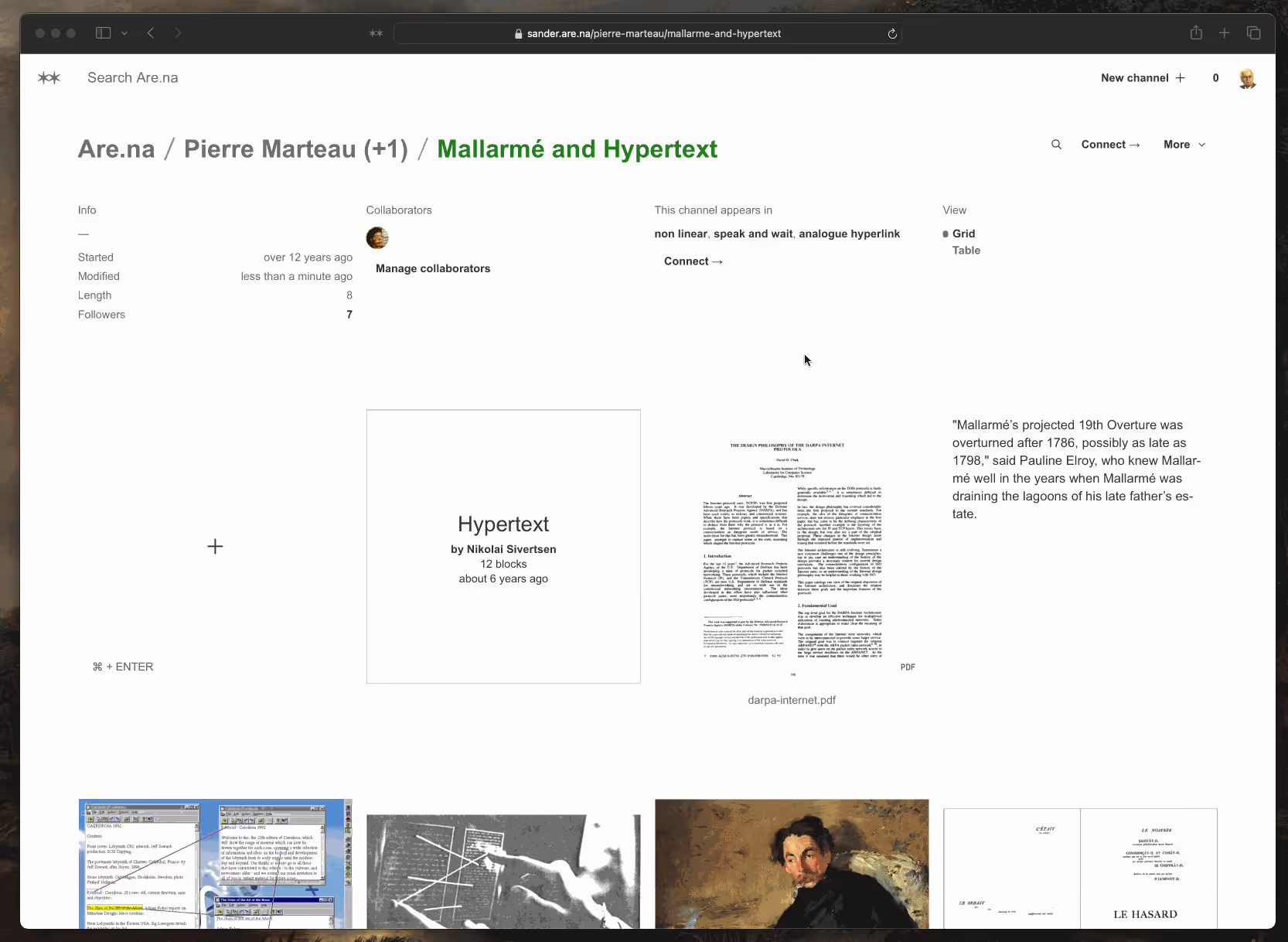
Then there is Are.na. Another platform. Another set of customs.
Are.na works by collecting, organising, and connecting ideas using "blocks" (images, links, text, files) within thematic channels, which act like a collaborative research journal or digital mood board without algorithmic feeds. It emphasises human curation, linking related concepts, and allowing for shared collections.
As a user, I can create channels, add content as blocks, and make them public or private. The space is one of conscious browsing where ideas surface over stages of development.
The cultural logic here is connection over hierarchy. There is no feed pulling my attention forward, no algorithm deciding what matters. I arrive instead into a field of fragments, through images, notes, and links. I connect one idea to another. A photograph to a sentence. A book to a thought still forming. Over time, these connections become a visible map of how someone thinks. Identity is assembled slowly, through association.
Three very different platforms. The same underlying understanding:
- The transaction should feel like participation, not extraction.
- The strongest brand is one that steps aside for the artifact.
- Identity is assembled slowly, through association, not declared.
Across all these examples, culture-first branding extends an ancient promise. More than offering a subscription, it is handing you a key to a more intentional corner of culture, where even the transaction itself feels like an act of belonging.
Why Branding's Future Depends on Cultural Attentiveness
If history teaches anything, it is that what imprints in memory is what is meaningful. Marks survived not only because they were efficient, but because they were trusted. Posters were preserved because they recognised something people already felt. Even our most contemporary platforms succeed when they offer more than novelty: a sense of place.
To treat branding as culture is not to romanticise it. It is to acknowledge its responsibility. Culture shapes memory. It confers importance. It tells people that their participation matters.
When branding forgets this, it becomes disposable.
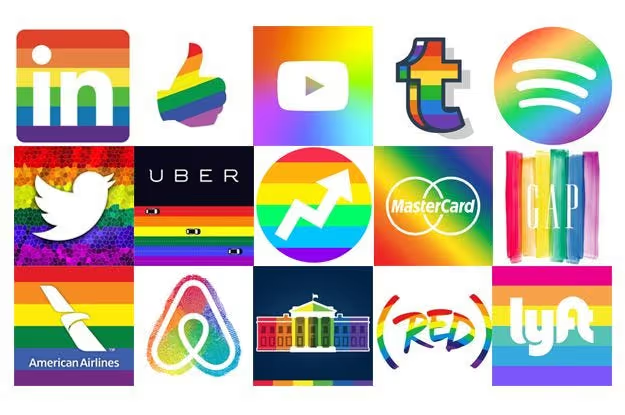
Consider how, each June, brands swap their logos for rainbow variants, publish a single campaign post, and return to business as usual the following month. In 2021, when the Human Rights Campaign publicly called out companies that donated to anti-LGBTQ+ legislation while flying Pride colours on their feeds, the performance became impossible to unsee. The colour change was not participation. It was camouflage.
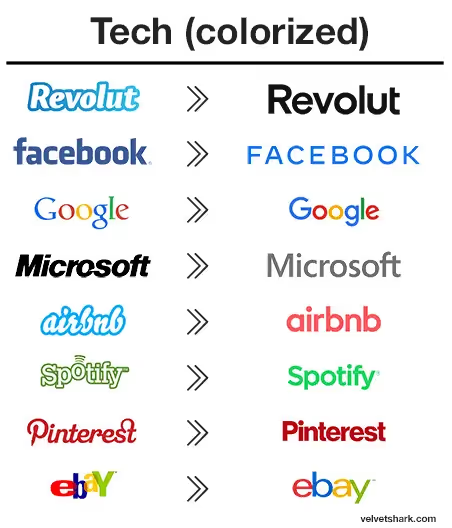
Or consider the wave of 2019-2022 rebrands, Mailchimp, Dropbox, Dunkin', that traded distinctiveness for a shared vocabulary of minimal wordmarks and blanded-down colour palettes, and became indistinguishable within months.
When branding becomes an active participant of culture, on the other hand, it becomes something people carry with them through years, through generations.
The future of branding lies in this very attentiveness: to history, to context, and to the identities people already inhabit or want to inhabit.
When I think about what goes wrong when branding fails to resonate, I often return to a moment Marc Gobe, renowned brand strategist and creative director of d/g worldwide, describes with visible discomfort. After years of travelling to understand how people connect with brands emotionally, what he encountered instead was an atmosphere of oppression.
Advertising had become excessive, intrusive, and arrogant. Brands were no longer offering symbols to recognise. They forced themselves into people's lives. Not a brand that invites participation, but one that surveils, interrupts, and insists.
Gobe's turning point arrives when cities begin banning outdoor advertising altogether, and graffiti becomes the only visual language people feel reflects their emotional reality.
Branding as imposition loses legitimacy. People reject such brands or feel alienated by them because they feel watched, managed, spoken at. They are reduced to subjects rather than elevated to collaborators in the future being built.
Which brings me back to that clay vessel along the Nile.
The mark pressed into its base was not placed there to interrupt anyone. It was placed there to be found by someone already looking, someone who needed to know they could trust what they held. That thumbprint was an act of participation, not imposition. It said: we made this, we stand behind it, it is yours to judge.
History and culture do not sit behind branding as reference material. They stand beside it as proof. Proof that they have always been the reason certain marks last, certain moments stay, and certain names are remembered.
If branding is to remain memorable, and if audiences are to feel important rather than merely addressed, culture cannot be an afterthought.
It must be the foundation.
Frequently Asked Questions
What does it mean for branding to be a cultural practice?
It means that a brand's marks, symbols, and language are doing the work that culture has always done: signalling trust, conferring belonging, and carrying meaning across time. A brand that operates as a cultural practice is not decorating a product. It is inserting itself into the way people understand their world and their place within it.
How is branding different from marketing in a cultural context?
Marketing asks: how do we reach the right person with the right message at the right moment? Branding, understood culturally, asks a different question: what does this mean, and who is it for? Marketing moves inventory. Branding builds the conditions under which people choose to participate in something they consider theirs.
What is an example of culture-first branding done well?
The Cuban magazine Tricontinental is one of the clearest examples. During the Cold War, its designers refused the visual language of propaganda and developed something entirely their own: folk references, surrealism, symbolic shorthand. It was read in revolutionary circles worldwide not as advertising but as shared identity. The brand and the culture were inseparable.
Why do brands fail when they ignore cultural context?
Because they end up speaking at people rather than with them. A brand that ignores context treats its audience as a demographic, not a community. It imposes instead of invites. And people, given any choice at all, will reject what feels like imposition and gravitate toward what feels like recognition.


Continue
Reading

Best Branding for Startups: Differentiation vs. Distinction
Most branding work for startups delivers a style guide. A style guide governs what a brand looks like. A signal system governs what a brand makes people feel, recall, and associate, at every touchpoint, over time, without being reminded. The difference between the two is the difference between a brand that is different and a brand that is unmistakable.


What Visual Identity Is Actually For (And What AI Cannot Replace)
The designer who cannot articulate the argument behind each element of a mark has not made a design decision. They have made a visual guess. AI generates visual guesses that look like design decisions. The difference is not immediately visible. That is exactly the problem.

Sustainable Packaging Is Brand Identity, Not Just Ethics
The brands that have built durable advantage through sustainable design share almost nothing in common, except this: the packaging choice was an expression of what the brand already believed about itself, not a response to what regulators or critics required.