The Boutique Branding Agency as Cultural Infrastructure
August 24, 2026
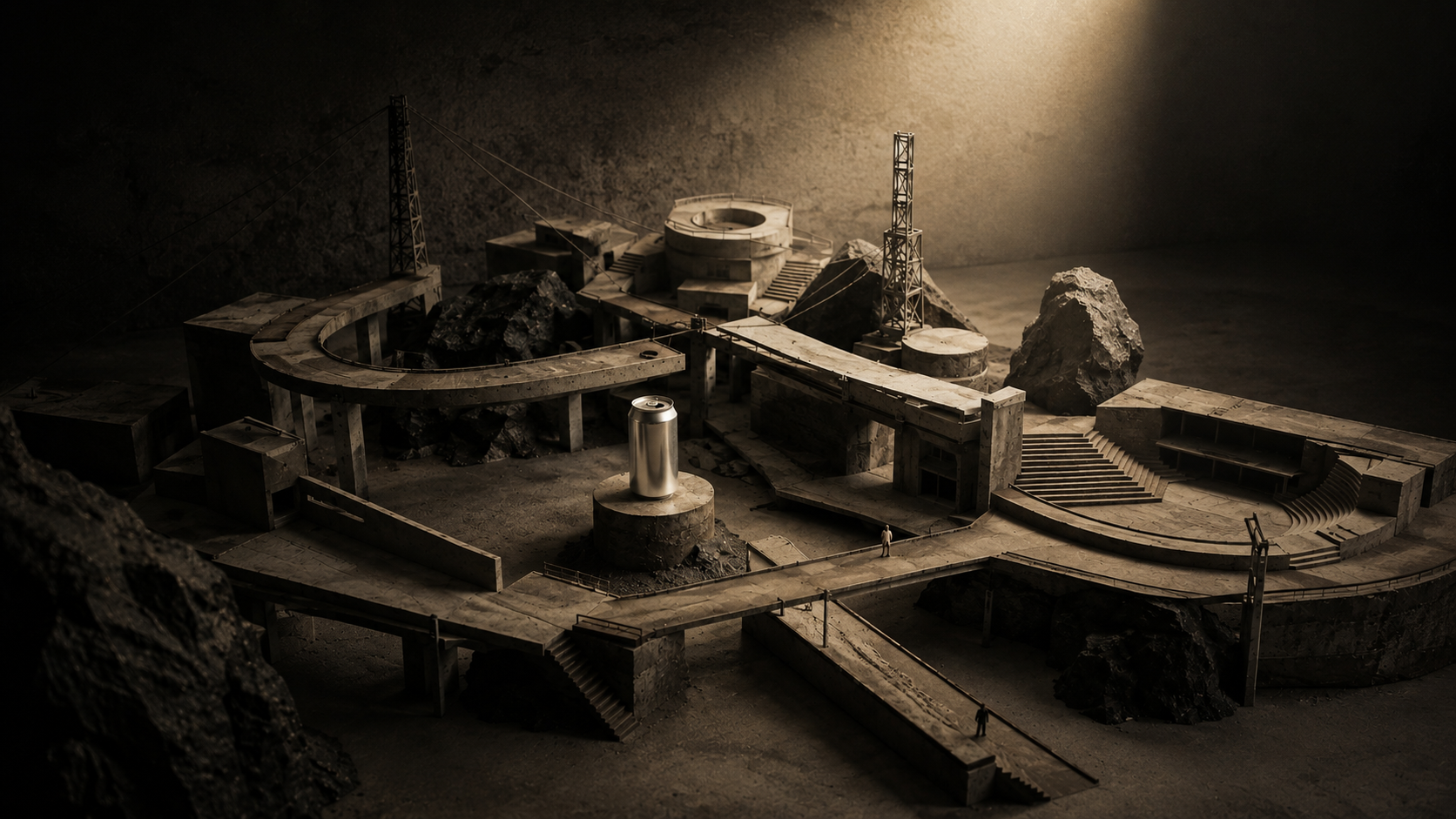




Picture the ridgeline.
Specifically, the one above Virgin, Utah, where Red Bull Rampage has been staged for two decades. The terrain is volcanic rock and loose shale. The drops are 40, 50, 60 feet. The athletes have been digging lines into the cliff face for three days before the first run. A production team that would embarrass most television broadcasters is rigged across a kilometre of high desert, capturing footage that will be distributed across Red Bull's owned media channels to over a billion people.
There is no energy drink in the frame.
A boutique branding agency working at the level of culture would recognise this scene immediately.
No can. No product shot. No "Red Bull Gives You Wings" graphic over the cliff edge. Just two wheels, one athlete, and a line that shouldn't be possible.
The question that matters: what is Red Bull actually doing here?
It is not running a marketing campaign. It is maintaining infrastructure. The infrastructure of a world where human possibility has no ceiling, where extreme performance is the dominant cultural value, and where the energy drink is not the point. It is the entry fee.
This is the distinction that separates brands that endure from brands that compete. And it is the conversation that every serious boutique branding agency should be starting at brief, not discovering two years into execution.
Table of Contents
1. What Branding Agencies Are Still Getting Wrong
2. What Cultural Infrastructure Actually Means
3. Red Bull, Patagonia, Glossier: Three Ways to Build Beyond a Product
4. Why Most Brand Briefs Don't Ask for This (and What Boutique Agencies Do Differently)
5. Four Questions a Boutique Branding Agency Should Start With
6. Frequently Asked Questions
What Branding Agencies Are Still Getting Wrong
Here is the honest version of most brand strategy conversations.
The agency asks: who are you, who is your audience, and what makes you different from your competition? The client answers in categories. A product. A segment. A set of differentiators. The agency builds around those inputs. The brief asks for a position. The strategy delivers one. The brand launches with a clear value proposition, a sharp visual identity, and a tagline that would survive a competitive review.
And then, a few years later, the brand competes for attention the same way everyone else does. Louder, cheaper, or better. Never actually different in the way that matters.
The problem is not the agency. The problem is the framework.
The Positioning Framework and Its Limits
In 1981, Al Ries and Jack Trout published what remains the intellectual backbone of most brand briefs. Positioning: The Battle for Your Mind argued that brand success meant owning a rung on the mental ladder: a clear, distinct position in the consumer's mind relative to everything else in the category.
It is a brilliant framework. It solved a real problem: the noise of a crowded marketplace, the shrinking attention of a saturated consumer. Its influence on commercial thinking has been enormous, and much of it is still right.
But here is what it was never designed to do: make the category itself irrelevant.
Positioning assumes a fixed arena. It is a strategy for winning a race. It cannot help you become the reason people want to race in the first place. And that is a different ambition entirely.
Marty Neumeier came close to naming what comes next when he wrote that when products look the same and messages compete for the same attention, the only differentiator left is how a company makes people feel. That is a better diagnosis. But even feeling is not the destination.
When Product Differentiation Stops Working
In almost every mature category, product quality has converged. The energy drink that competes with Red Bull on caffeine content, taste, or price will not close the gap. The outdoor jacket that competes with Patagonia on materials, construction, and sustainability certifications will not close the gap either. The beauty product that matches Glossier on ingredients and minimalist design will find itself on the same shelf with nothing to say.
Douglas Holt studied this phenomenon for years before articulating it clearly in How Brands Become Icons (Harvard Business School Press, 2004). His argument: the most valued brands are not valued primarily for what they do, but for what they symbolise. They have become cultural icons: brands valued more for the beliefs they carry than for the products they sell.
The question stops being what makes you better. It starts being what you mean, and to whom.
What Cultural Infrastructure Actually Means
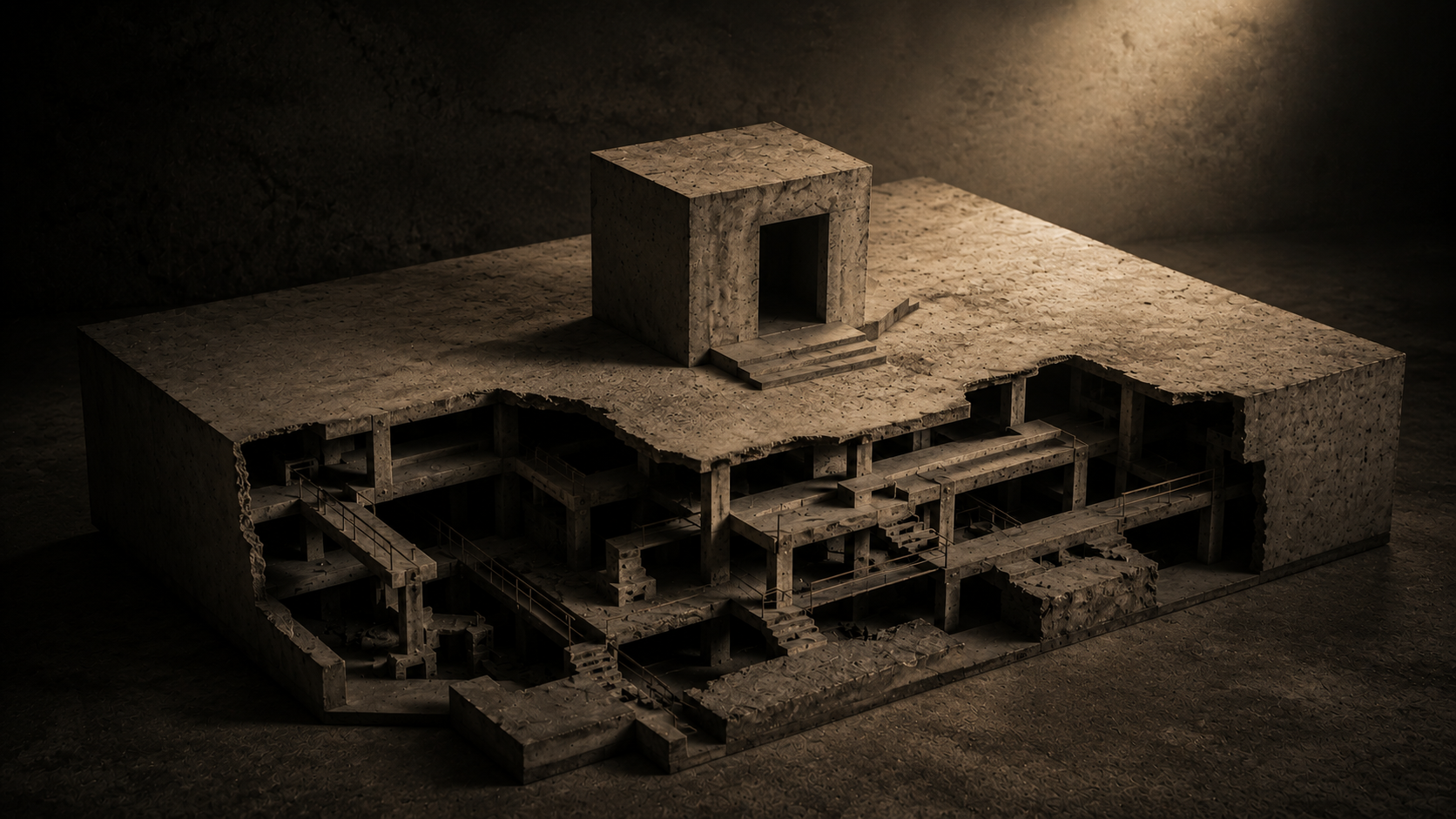
Infrastructure is not a strategy.
It is a structural condition. Infrastructure is the ground that makes buildings possible. A road is not a destination: it is the precondition for reaching one. A power grid does not sell electricity: it is the architecture within which electricity becomes useful.
A brand operating as cultural infrastructure is not running a campaign. It is maintaining the conditions within which its products become meaningful. That distinction changes what the brand builds, what it invests in, and how it measures success.
Identity Myths vs. Product Benefits
Holt's central concept is worth naming precisely because it is so frequently misread.
An identity myth is not a brand story. It is not a narrative that makes the product feel more interesting. It is a belief, held collectively, that the brand expresses on behalf of a community. A belief that, in Holt's framing, soothes collective anxieties resulting from acute social change.
Holt spent years mapping how Coca-Cola, Harley-Davidson, Nike, and Budweiser each built their iconic status not through better products or louder campaigns, but by anchoring themselves to a cultural belief their community needed held. He was explicit about what this approach is not: it cannot be built through conventional branding strategies that focus on benefits, brand personalities, or emotional relationships.
The product is the ceremony. The myth is the religion.
When someone reaches for a Red Bull, they are not making a beverage decision. They are making a small statement about what they believe about human capacity. The can is the token. The infrastructure is everything that makes that token mean something.
The Three Layers of Cultural Infrastructure
Brands operating as cultural infrastructure share three structural elements. They are not brand pillars. They are not a mission statement and a set of values. They are architectural.
The first is worldview: the belief the brand holds about how things are, or should be. Not aspirational language for a website. A real stance, specific enough to be disagreed with, strong enough to predict behaviour across contexts.
The second is community: who belongs to this brand. Defined not by demographics or purchase behaviour, but by shared belief. People who would recognise each other at a Red Bull event without being told to look for each other.
The third is aesthetic territory: what the world looks and feels like when you are inside this brand. The sensory grammar of belonging. Not a colour palette or a typeface. A register. The tone of the copy, the type of images, the rhythm of the events, the quality of the production. All of it consistent enough that a single piece of content is recognisably from this world, without a logo.
These three layers are the infrastructure. The product lives inside them, not the other way around.
The difference between brands that build this kind of infrastructure and brands that simply reflect the culture around them, rather than actively shaping it, is a distinction we've mapped in our piece on brands that create culture versus brands that reflect it. The short answer is that infrastructure requires commitment. Reflection just requires observation.
Red Bull, Patagonia, Glossier: Three Ways to Build Beyond a Product
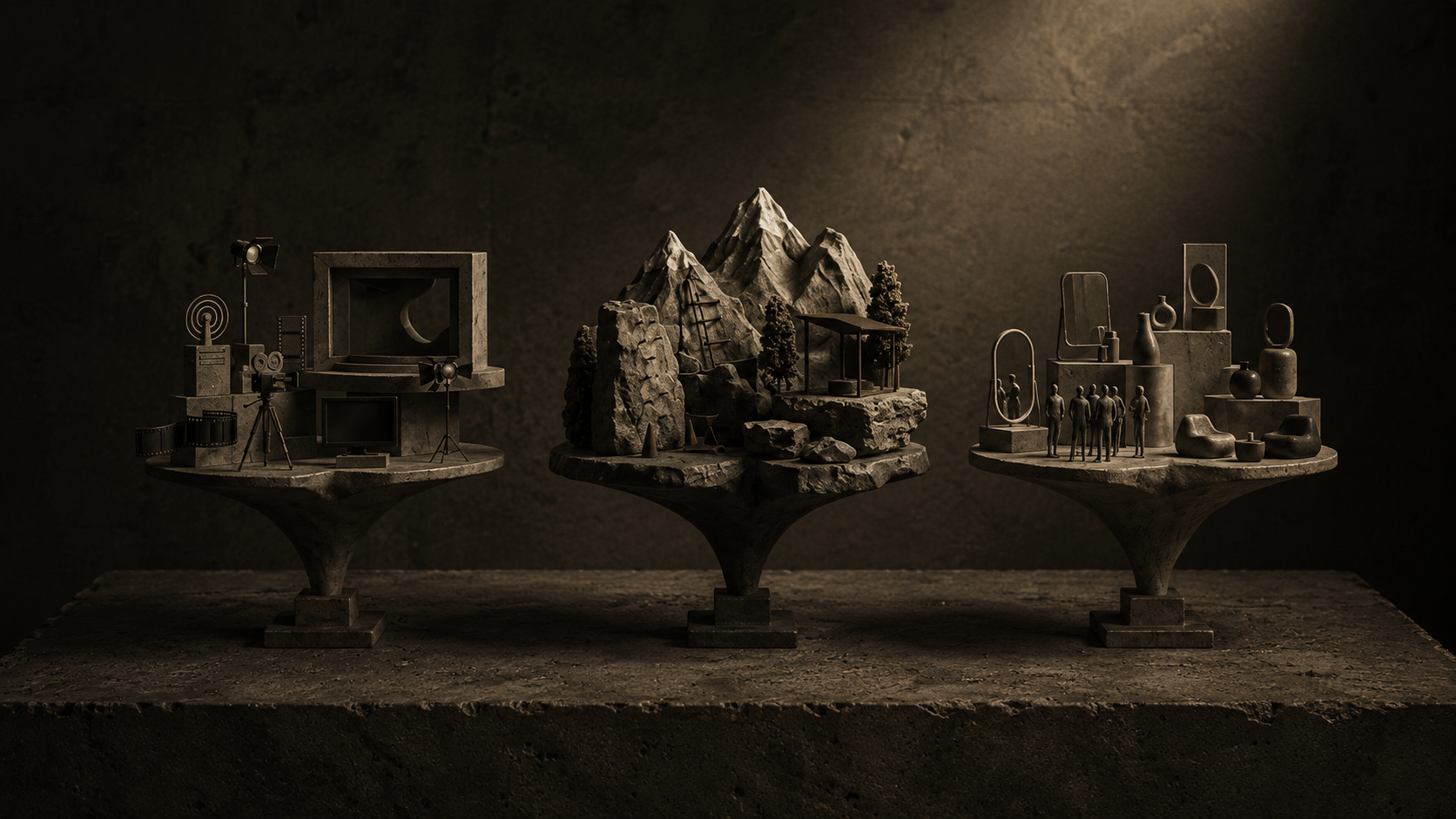
Each of these three brands represents a different structural approach to cultural infrastructure. Each entered from a different angle. None of them arrived there by accident.
Red Bull: The Media Company
Dietrich Mateschitz launched Red Bull in Austria in 1987 after encountering a Thai energy tonic called Krating Daeng during a business trip to Bangkok. From the beginning, he reportedly framed the company's purpose in terms that had nothing to do with beverages: Red Bull, he is widely cited as saying, is a media company that happens to sell energy drinks.
Whether or not those were his exact words, they describe exactly what was built.
In 2007, Red Bull launched Red Bull Media House, not a content team inside a marketing department, but a fully operational media entity with its own TV channel, print magazine, film division, and record label. It employs over a thousand people. It licenses footage to broadcasters worldwide. It generates its own revenue. When a news station uses Red Bull footage, the brand appears without buying a second of airtime.
The Red Bull Stratos project is the clearest single expression of this infrastructure logic. In October 2012, Felix Baumgartner stepped out of a capsule 128,100 feet above the Earth and broke the sound barrier in freefall. Eight million people watched it live on YouTube. Fifty television channels broadcast it. The estimated value of the earned media was €6 billion.
This was not a campaign. It was infrastructure: proof, at enormous cost and five years of production time, that the brand's worldview of human potential is real. The energy drink was in the cooler at the viewing parties. It was selling because the infrastructure had already sold it.
Patagonia: When the Worldview Is the Product
Yvon Chouinard founded Patagonia in 1973 not because he wanted to build a clothing company, but because the climbing equipment available wasn't good enough for the mountains he wanted to climb. The worldview preceded the product category.
By 2011, Patagonia had spent decades building infrastructure around a single belief: that the natural world is worth protecting, including from the company's own supply chain. When Black Friday 2011 arrived, every retailer in America was running promotions. Patagonia ran a full-page advertisement in The New York Times with a photograph of their best-selling R2 jacket and five words above it: "Don't Buy This Jacket."
The ad detailed the environmental cost of manufacturing the garment: 36 gallons of water, 20 pounds of CO2. It asked consumers to think before buying anything, including from Patagonia.
Sales increased 30% the following year, from $415 million to $543 million.
This is not a paradox. It is the logical commercial outcome of having built infrastructure around a worldview so coherent that honesty about its own contradictions deepens loyalty rather than damaging it. As Chouinard had already articulated in Let My People Go Surfing (Penguin, 2005), the company's values were always more important than its products. The campaign didn't build the brand. The brand made the campaign possible.
Glossier: The Community Before the Product
Emily Weiss launched Into The Gloss in September 2010 from her apartment, writing before her shift at Vogue began, usually from 4am. It was a beauty blog. More precisely, it was a space where women could talk about skincare and beauty on their own terms, outside the top-down logic of an industry that had spent decades telling them what to want.
By 2014, the community had 2-3 million monthly readers and a clear, collective belief: that beauty standards should be set by the people who wear makeup, not by the brands selling it.
Weiss launched Glossier in October 2014. Four products. No advertising budget. 80% of early customers came through peer referral.
She didn't build a product and then find a community. She built the community, waited four years, and then built a product the community had already told her it needed. Glossier peaked at a $1.8 billion valuation in 2021.
The infrastructure made the product possible. This is the Glossier model: community first, product second, always.
Three different entry points, the same structural orientation. And the distinction that separates all three from brands that merely reflect the culture around them rather than actively shaping it is precisely what most briefs fail to name.
If you are working through what this looks like for your brand, this is the conversation Izart starts at brief. {See our brand strategy work}
Why Most Brand Briefs Don't Ask for This (and What Boutique Agencies Do Differently)
The failure is not ambition. Most founders, genuinely, want their brand to matter beyond their product category. They want what Patagonia has, or what Red Bull has. They will describe it in those terms in a discovery meeting.
Then they hand over a brief that asks for a positioning statement, a value proposition, and a set of brand pillars.
The Brief That Traps Both Client and Agency
The standard brand brief is a product brief wearing a brand costume.
It asks: who are we, who is our audience, what are we competing against, what makes us different? These are the right questions for building a product brand. They are the wrong questions for building cultural infrastructure.
The brief that produces cultural infrastructure asks: What does this brand believe that most of our competitors don't? What would exist in the world if this brand fully succeeded, beyond what our product category produces? Who belongs to this brand, and what do they believe about themselves?
Without those questions on the brief, cultural infrastructure is never proposed. Because the output of a brief is always structured by what the brief asks for. Holt documented this precisely: conventional brand managers are trained to think in product benefits, brand personalities, and emotional relationships. The brief reflects the training, and the training produces the same category of brand, year after year.
Holt and Cameron named the missing document in Cultural Strategy: How Innovative Ideologies Build Breakthrough Brands (Oxford University Press, 2010): a cultural brief, designed to specify the brand's ideology, its myth, and the cultural codes that would make both real. Most briefs don't include one. Most agencies don't write one.
The Structural Advantage of Working Boutique
Large agency structures are built for campaign delivery at scale. They are organised around account management, repeatable process, and output volume. These are genuine operational advantages. They are also the reason the cultural infrastructure conversation rarely happens inside them.
The boutique branding agency operates differently. Not because smaller means smarter, but because of where it sits. Boutique agencies work upstream of execution, closer to the founding idea, without the institutional pressure to stay inside a category brief. The sustained strategic dialogue that cultural infrastructure requires is the kind where you interrogate the founder's worldview rather than their product positioning. It happens more naturally in a room where strategy and execution aren't separated across departments.
Neumeier identified the structural problem in 2003 in The Brand Gap: the distance between strategy and creative thinking, caused by experts working in separate silos. A boutique environment reduces that distance architecturally. The same people who ask the worldview questions are the people who build the visual territory. The brief doesn't travel across a client services desk and arrive diluted.
This is not a claim that every boutique agency operates this way. The distinction is not firm size. It is strategic orientation: whether the agency is set up to answer what position will win the category, or what world this brand is building.
On the connection between demand creation and brand belief, our piece on why demand follows belief, not awareness, builds this argument at greater length.
Four Questions a Boutique Branding Agency Should Start With
These are not checklist items. They are interrogations. A client who can answer all four in a single meeting either has a genuinely strong cultural foundation already, or is not yet engaging with the depth of the questions.
Q1: What does your brand believe that most players in your category don't?
This is the worldview question. A brand with no distinct belief has no infrastructure to build on. The answer needs to be specific enough to be disagreed with. If every competitor would say the same thing, it is not a worldview. It is a positioning platitude dressed up as values.
Q2: Who belongs to this brand, and what do they believe about themselves?
Demographics don't build infrastructure. The question is not who your target audience is. Not what age bracket or income segment you are going after. The question is: what does a person who belongs to this brand believe to be true about themselves? The brand's job is to make that belief feel more real, more confirmed, more worth holding.
Q3: What would exist in the world if this brand fully succeeded, beyond your product category?
None of the best-known cultural brands can answer this by pointing at their product. Red Bull's full success looks like a world where the limits of human performance are constantly being pushed and documented. Patagonia's full success looks like a world that consumes less. Glossier's full success looks like a world where beauty standards are defined by the people who wear it.
None of those answers mentions a product.
Q4: What is the aesthetic territory that marks the edge of this world?
This is the sensory question. Cultural infrastructure has an unmistakeable aesthetic register: not a brand guideline, but a felt sense of belonging. "Clean and modern" is a preference, not a territory. A territory is specific enough that you could make a predictable aesthetic decision in a completely new context, without a style guide. It covers content, packaging, events, and copy, and the register is consistent across all of them.
Our thinking on why brands are platforms, not just products, extends this framework into business model territory worth reading alongside this.
Frequently Asked Questions
What is cultural branding, and how is it different from conventional brand strategy?
Cultural branding, as Douglas Holt defined it, treats the brand as a carrier of identity myths rather than product benefits. Conventional brand strategy optimises for competitive advantage within a category. Cultural branding operates above the category, embedding the brand in beliefs the community holds about themselves. The brand doesn't differentiate from competitors. It makes competitors a secondary concern.
How does a boutique branding agency approach cultural positioning differently from a larger agency?
A boutique branding agency works upstream of execution, where the founding worldview is still being shaped. The cultural infrastructure conversation requires sustained interrogation of belief and community, not just category positioning. Boutique agencies close the gap between strategic thinking and creative execution by holding both in the same room, at the same time, from the brief stage onward.
Is building cultural infrastructure only viable for brands with large budgets, or can early-stage brands do this?
Emily Weiss built Into The Gloss with no budget, no staff, and a few hours a day before her Vogue shift. The community that became Glossier's infrastructure was four years in the making before the first product existed. Cultural infrastructure is not a function of spend. It is a function of clarity of worldview and genuine commitment to the community that forms around it.
What is the practical difference between brand positioning and brand as cultural infrastructure?
Positioning answers: where do we sit relative to competitors? Cultural infrastructure answers: what world are we building, and who belongs to it? Positioning is necessary. It is also the floor, not the ceiling. Most brand work stops at positioning and calls it a strategy. Cultural infrastructure is what happens when a brand keeps going after the position is set.
The Infrastructure Is Already Built
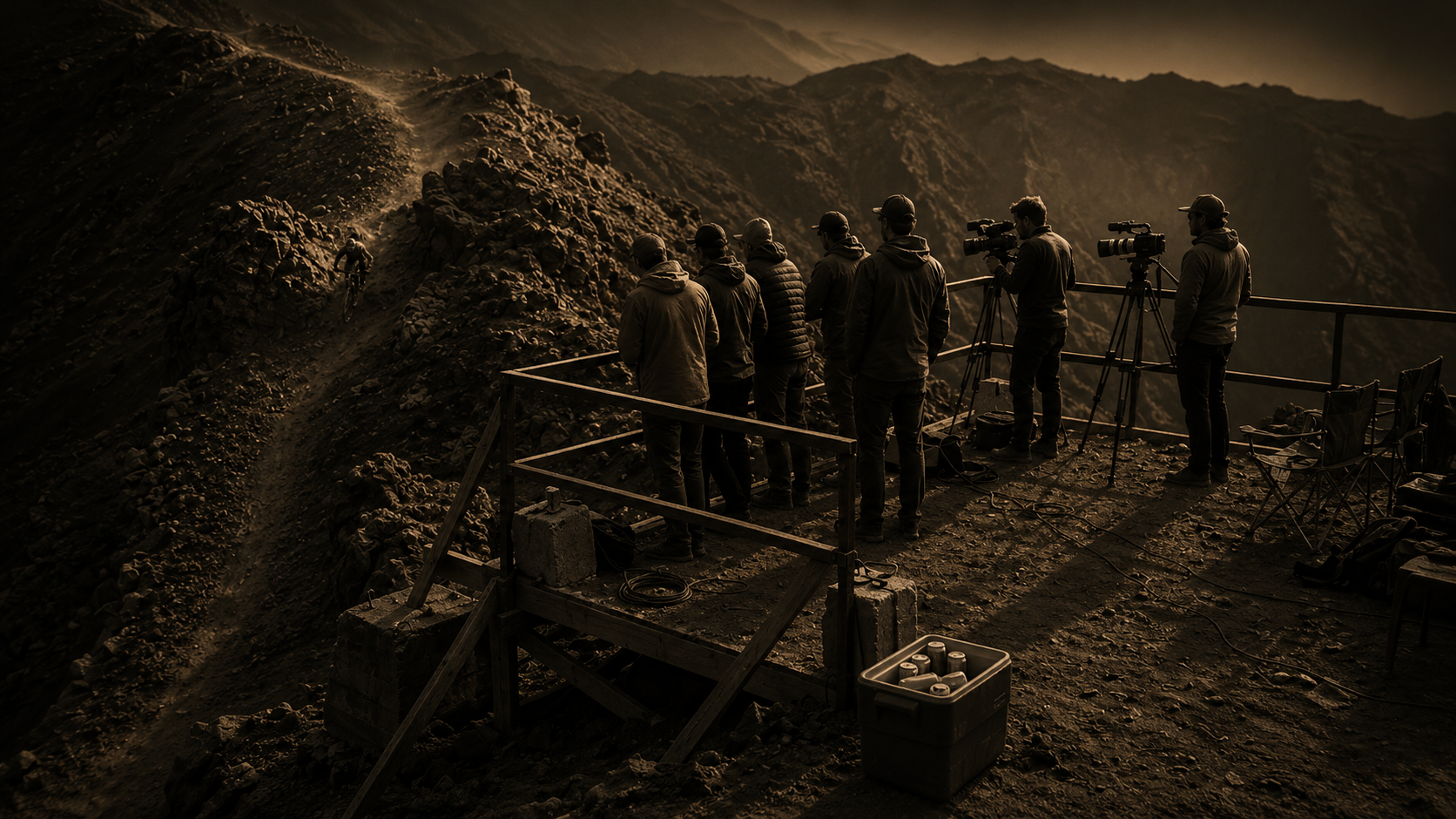
Back to the ridgeline.
The athlete drops in. The cameras hold the line. The crowd doesn't need to be told what to feel, because the infrastructure has already taught them. The belief is already shared. The identity is already confirmed by the act of being there.
The energy drink is in the coolers.
It is selling. Not because someone placed an advertisement on the cliff face. Because two decades of infrastructure maintenance, of events and media and Stratos jumps and athletes turned into characters, has made the product the natural object of this world. Red Bull didn't create demand for an energy drink. It created a world in which a certain kind of person needs one.
This is the ambition that most brand strategies fail to articulate. Not because the clients don't want it, and not because the thinking doesn't exist, but because the brief never asked for it.
The conversation starts earlier than most people think. It starts before the positioning workshop, before the visual identity brief, before the tagline. It starts with a question about what the brand believes, and whether that belief is strong enough to build a world around.
A brand that can answer that question honestly is not yet a product brand. It is infrastructure in waiting.


Continue
Reading

Best Branding for Startups: Differentiation vs. Distinction
Most branding work for startups delivers a style guide. A style guide governs what a brand looks like. A signal system governs what a brand makes people feel, recall, and associate, at every touchpoint, over time, without being reminded. The difference between the two is the difference between a brand that is different and a brand that is unmistakable.


What Visual Identity Is Actually For (And What AI Cannot Replace)
The designer who cannot articulate the argument behind each element of a mark has not made a design decision. They have made a visual guess. AI generates visual guesses that look like design decisions. The difference is not immediately visible. That is exactly the problem.

Sustainable Packaging Is Brand Identity, Not Just Ethics
The brands that have built durable advantage through sustainable design share almost nothing in common, except this: the packaging choice was an expression of what the brand already believed about itself, not a response to what regulators or critics required.